Showing posts with label Pacific Northwest. Show all posts

Thursday, October 12, 2023

A hazy shade of winter


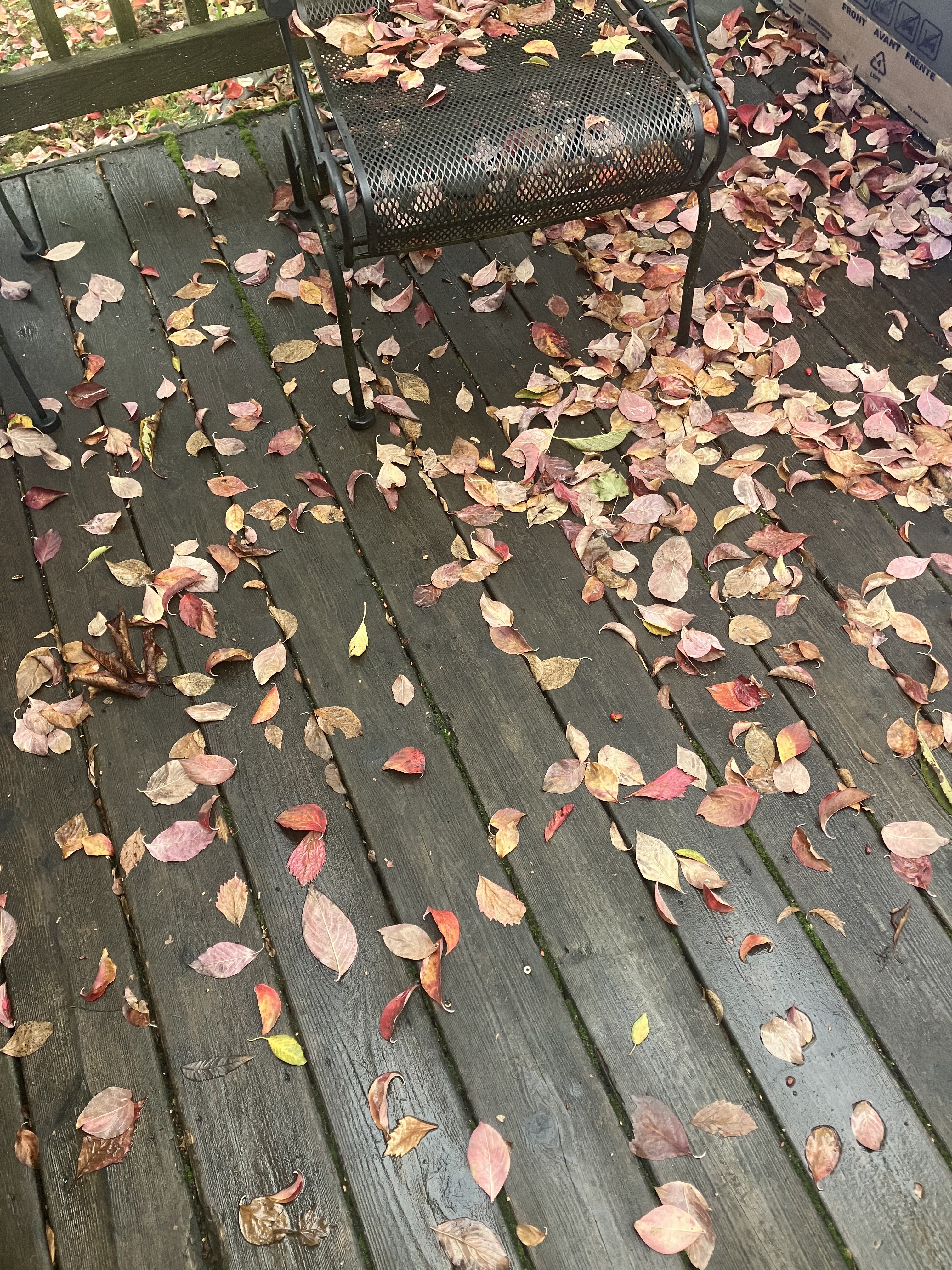
The summer has finally left, and the rains returned.

The winter is not far off.

I love the autumn, the somber, reflective mood fits me very well...although I sometimes miss the crisp dry chill of the Octobers of my Midwestern childhood. The Northwest lacks the fiery colors, as well; our deciduous trees are dominated by the bigleaf maple, Acer macrophyllum, which does turn a handsome golden-yellow but briefly; the leaves wither and brown up as quickly as they turn.

The days grow short, the shadows long, and another year draws to a close.

Saturday, April 23, 2022

Brewed Dudes, or, Excuse me, waiter, but my coffee has a pistol in it

 In order:
1) "SS" is "America's Coffee"? WTF? Hello? "Sounds better in the original German" much?
2) If you're calling the sound of a suppressed semiauto pistol "smooth" you either a) have never heard one, or
b) have no respect for the intelligence of your audience.
3) Ammosexuals are deeply weird people.

I’ve seen these guys around the Internet but I've never bothered with them because
1) we roast better coffee here and
2) I’ve never been comfortable around people with assault rifle fetishes because
a) if you’re gonna have a kink for God's sake have a sexual kink, because they’re more fun, and
b) I ran a battery of 105mm howitzers, fucknozzles, and I’ll see your pissy little 5.56 and raise you four goddam inches. 
 
Fire for effect, bitches!

Thursday, May 14, 2020

Blundering into the blast zone

Forty years ago yesterday (May 13, 1980) as Dick Waitt records in his 2014 work In the Path of Destruction, the Washington State Department of Emergency Management and other agencies including the U.S. Geological Survey were forced by public pressure to open up large portions of the forest lands around the then-unquiet Mount Saint Helens volcano that had been off-limits since the end of April.

(then-Governor Dixy Lee Ray had signed an order establishing a "red zone" around the volcano on 30 APR 1980 that turned out to be, in fact, grossly undersized - something like 50 of the 55 to 60 people who died in the eruption on 18 MAY were outside the original "red zone" - see below).
But that wasn't enough for the people who made their living in the woods, or who had cabins or houses near the volcano, or who just wanted to go back into the forest to mine or pick mushrooms or whatever.

Saturday, 17 MAY, something like 50 vehicles drove into the area that had been closed to bag up their stuff. The eruption took place at 8:32am, before the second planned caravan enetred the blast zone at ten, and since it was a Sunday the active logging tracts were empty.

Still, somewhere in the vicinity of 55 people were killed.

That ain't Pompeii...but, then, we knew more than they did back in the First Century, and knew how damn deadly dangerous these stratovolcanoes were. The volcanoligists of what eventually became Cascades Volcanoes Observatory warned the State of Washington that this monster could do all sorts of unpredictably deadly things. And the state government listened...until people grew bored and restless and demanded to "reopen" the woodlands around an actively erupting volcano. We learned a hard lesson about the power of convergent margin tectonics and nature in general.

As a geologist I find it kind of interesting to reflect on that, just at the moment.

Why?
Oh...y'know. No reason.

Just a thought.

Friday, December 23, 2016

Final Fantasy IV; Malheur Moron Mulisha Edition

This article talks about the Malheur Moron Metal Mulisha and how their cunning plan was to Free the Federal Lands! from the oppression of the Evil Empire of the BLM and then a thousand Make America Great Again flowers would bloom in Harney County.
(h/t to Nancy Nall who linked to it today)

There was only one teensy-tinsey little problem with that; geography and topography. Which is to say...reality.

Because Harney County – just like every other deserted shithole part of rural America – is WAY the hell out in the middle of nowhere; it’s almost perfectly equidistant from anywhere in the Northwest where people live and people want to live; the population centers of Oregon to the west, Nevada and Utah south, Idaho and Washington north and east. Shipping anything to market is punitive, given that wetter places (better for timber, grain, and livestock) are closer to those markets.

Badtux the Rural-travelin' Penguin encountered a similar sort of place out in the Mojave, of which he notes:
"These people are stranded, like so many other Americans, stranded in the desert of what was once the American Dream but now is just a hardscrabble existence in a harsh and brittle place. I haven’t looked around to see if I can see lots of red caps. But I bet I’ll find plenty of them there. Because where the American Dream has died, something evil this way comes."
Harney was homesteaded back in the 19th Century and an overwhelmingly large number of those operations failed. The distances were too large, the transportation grid too poor, and the water too scarce. The place is scenic as all hell…but not great for small farming or ranching without serious white-people welfare (a.k.a “farm subsidies” and below-market-low grazing fees).

What makes it even more fucked-up is that the collapse of places like Harney County wasn't a mistake or an accident. It was engineered by a combination of greed, stupidity, and unscrupulousness.

The “great plains” and the intermontane deserts of eastern Oregon were shrub- and grassland steppe for a reason and the Plains tribes and the high desert outfits like the Northern Paiute weren’t horse nomads because they were easily bored with the local scenery.

Without large-scale irrigation the bulk of the lands West of the Mississippi and east of the Sierras/Cascades are too arid to support tilth agriculture. Even pastoralism (for European cattle, anyway...) was fairly iffy in a lot of places.

But “real estate developers”, manifest destiny floggers, and grifters – the 19th Century Trumps – conned tens of thousands of proto-Trumpeters into believing nonsense like “rain follows the plow” (the theory that tilling semiarid grasslands releases soil moisture that then returns as rain. Seriously; I shit you not people believed that stuff…). Plus the U.S. government wanted white farmers to replace the Dangerous Savages.

So what would happen is that every couple of decades North America would get a change in the ENSO (the “El Nino/La Nina” variation) and the Plains would have a couple of wet years or five...enough to get a bunch of sodbusters through the winter. And the homesteaders would proliferate; suddenly Harney County was Great Again!

Aaaaand…then the climate would return to the semiarid norm, crops would fail, cattle starve, the homesteaders go bust. The bank would foreclose, everybody would move on...until the next wet cycle.

Wash, rinse, repeat; this happened something like 3-4 times between 1865 and the beginning of widespread irrigation in the Fifties - a change that was hugely supported by those damn imperialists of the BLM and the U.S. government irrigation programs.

As P.T. Barnum would have said; there’s one born every minute…

IF the federal drylands were opened the only real claimants would be the big timber and big ag outfits, if them, simply because only those deep-pocketed corporate entities would have any hope of making a go in Harney County and that only because of their ability to cover bad years and their economy of scale.

Nope.
The fantasies nourished by Bundys across the West (the so-called “Sagebrush Rebellion”) and the people in these dying places are as invasive, useless, and destructive as the tumbleweed that we mistake for authentically Western but are, in fact, a pernicious Russian weed…much like our new President-elect...

Monday, August 08, 2016

Missy Takes A Day Out

"I want to go to Silver Falls, Daddy!"

I have no idea why the Small One remembers going to this place, deep in the bosky dells of Marion County, in the lesser foothills of the Cascades. But she did, and her mom didn't want to drag herself down the long road southeast from Portland, so Sunday was a Daddy and Daughter Day Out, on the road to Silver Falls State Park.

So after a lazy morning the Girl and I started our adventure making sushi for lunch.

Yes. Sushi. The Small One is quite the sushi-chef.

She wields her makisu 巻き簾, the bamboo rolling-mat with the precision and flair of the true itamae-san as she crafts her tempura shrimp-rolls (her favorite).

Perhaps it's her small fingers, or, just perhaps, it's her love of the sweet savor and delicate crunchiness of the tobiko that leads her to sprinkle it liberally inside her makizushi.
The rolls are carefully sliced (that's Daddy's job...) and packed in the cooler, and the goodbyes are said; effusive to the relieved Mother, curt to the deliberately indifferent Brother, and we squeeze into the little Honda for the long ride.

And it IS a long ride; down through Portland and onto the freeway. South through the surprisingly heavy Sunday traffic choke-points of the Terwilliger Curves, Tigard, Wilsonville, and the Boone Bridge, before finally escaping to the relatively speedy stretch south of the Willamette River where the broad flatlands stretch away, green with summer and dark with a cloudy morning's rain.

The Girl keeps up a stream of chatter because...well, because she's a little chatterer. She enjoys her own silliness, exclaims little-girl affection for random farm animals that would intimidate her if encountered up close. She scoffs at her older brother's idleness in front of a video screen and hopes for an adventure in the woods ahead.

Off the freeway at the greedy sprawl of Woodburn, then east, then south along the faded strip of Highway 99 until we reach the left turn for Silverton. From there it is truly into the undeveloped lands of the east edge of the Willamette Valley.

The valley itself is, to my eyes, an unappealing square flatness of farm field and copse. Southeast of Woodburn, however, the land rises into pleasant undulation towards the cloud-wrapped mountains beyond.

The road itself loses its drab linearity and winds, dips, and climbs in an entertaining fashion, made all the more pleasing by not being blocked by sluggish tractors or gear-grinding heavy trucks. The Girl and I sail through the woods and fields and are passing through the faux-Teutonic hamlet of Mount Angel in short minutes.

Small One is perplexed, then amused, by my insistence that the wooded hilltop east of the town is occupied by actual monks, and laughs at the fakey-German gimcracks as we pass through.

But her laugh is on me when we stop at the IGA grocery outside Silverton to pick her up a bottle of water. It turns out that today is the culmination of "Homer Davenport Days" in the little town and she gleefully predicts a "Tulip Festival", crowing with delight at the prospect of a Furious Daddy.
("Tulip Festival", by the way, is family shorthand for "some unforeseen event that creates incandescent rage in the parent", after the time my father the Master Chief was driving my family to our annual vacation in upper western Michigan and got stuck in the middle of some sort of Holland, Michigan celebration.

Of course, in those pre-Internet days he, and we, had no idea that this was a thing until the traffic on the little road through town - this being the late Sixties the idea of a highway or bypass up the east side of Lake Michigan was an arrant fantasy - slowed, and then slowed, and then stopped and sat.

So we sat. And sat. In a dark green station wagon. In the August heat. For several hours. While my father, normally a man of moderate temper and inexpressive mien, grew more furious by the moment.

By the time the traffic began to move and we crept through the festive town my father would have cheerfully nuked Holland, Michigan, and all its inhabitants into a glowing slag and danced gleefully upon the ruin.

Ever since then the prospect of seeing the top of the paternal parent's head fly off in rage has been the sincere wish of both children, and Missy was practically chortling in hope.)
Sadly for The Girl, the Tulip Festival (or Homer Day, or whatever...) was confined to a side street and we sailed through Silverton practically without a check and up into the close-set woodlands and rising hills above us.

Reaching the north end parking lot we find that we're not the only people who decided to visit that day; the lot is full, and we have to look around for an alternative. That turns out to be a gravel side road with a broad shoulder where we leave little Stinky the Honda and walk back to find our path for the day.


That turns out to be, first, "Little North Falls", a pretty box-canyon headed by a pinnate rush of cold, clear water. We admire the pools in the slickrock at the base and the size of the trees felled and boulders moved by the winter floods.


The Girl finds water striders dimpling the glassy surface and makes little wavelets to make them skitter away. I stop to take pictures of the passage of the winter's kolks; the sudden holes in the basalt filled with grindstones where dark gray-green crayfish scuttle into the shadow when we loom over them.


A young couple has, in "defiance of municipal regulations", brought their small white terrier with them to the falls. The little creature is, in violation of normal terrier mores, hesitant about rushing around sniffing and detecting, perhaps because of the water-slick rock.

My own little creature is, as is her wont, entranced. While she found having an actual dog somewhat of a nuisance as a pet she enjoys other people's dogs and is coo-ish and enticing towards this one which, however, is only mildly curious in return about the small cozening human. Perhaps this has something to do with the Small One's lack of food.
From there it is back to the bridge over Silver Creek and then down the trail to "North Falls"; this is what the Girl remembers, though she is dismissive of the small plume of falling water.

"It was a LOT bigger last time!" she declares.

Indeed, the plume is much diminished from the earlier spring when we last visited. The crowds are somewhat larger, however, and I force myself not to make an irked sound as we pass the self-impressed boobs using some sort of scribing tool to etch their little piece of eternity into the rock ceiling.

Missy wants to lob a rock into the fall, so we carefully pick out a spot where we can see all the way to the plunge pool and she lets fly; the palm-sized projectile flies about a quarter of the way out to the cascade before arcing down into the swordfern and vinemaple.

Still; Missy is well pleased with herself, and skips on down the trail to where it meets Silver Creek some quarter-mile or so further on.

There she entertains herself mightily plonking rocks in the water, launching clover petals, and using the swagger stick I picked up to riffle the cold waters not long removed from the snowfields of the High Cascades.


We share this little slackwater with a Filipino family, whose youngest son is rampaging through the water soaking his clothing and generally ignoring the requests, imprecations, and demands of his female relatives with squalling defiance. I foresee a difficult adolescence for Young Master, whose expectation of similar indulgence from the larger world is likely to go as unfulfilled as the Silver Creek channel is today.

The Girl is ready to continue on, but I know the capability of those short legs better than their owner does, so I turn us backward, heading the short way towards the north parking lot. We circle back under North Falls, casting another stone along the way and pausing to ooh and ah at the tree casts, the cylindrical voids in the overlying basalt ceiling formed by millions-year-old trees that were buried in the flowing lava.

These piers are empty, hollow columns rising into the darkness overhead unlike the tree-cast I once told you about. But they, too, to me seem fraught, empty yet full of the vanished forest and the uncountable years.

The Small One is only mildly impressed.

She is more excited retelling another, more recent Family Legend, this one the story of Daddy and Mommy and Pre-Mommy and the Boring Little Brown Bird* ("Mommy was mad because she wanted Thanksgiving Dinner more than the Boring Bird!")

She pockets the two smooth stones she picked up along the creek, momentos of her adventurous day.

The drive home is unremarkable outside the appalling tie-up the begins south of the Aurora exit and continues grinding along in fits and starts painfully slowly almost to North Wilsonville before, suddenly and inexplicably, dissipating.

The Small One is weary from her hike (and a brief hop to our Powell's bookstore for some new stories to read...) and remains in the back seat reading about kitten Chi's newest shenanigans rather than take the few steps into the store we stop to get her brother's much-needed XBOX accessories.


But she is again chatty and excited when we get back home, informing her mother (and her brother, if he cared enough to listen) all the excitement we shared in the Oregon Wild. She bounces off into her back room with her new book in hand.

And returns a quarter hour later, flops down backwards on the parental bed, and announces with a sigh and a voice heavy with the pain of bottomless ennui:

"I'm bored."


*(The official version of the story of "Mommy, Daddy, Pre-Mommy and the Boring Little Brown Bird" ("Oregon's First Louisiana Waterthrush") is told in the first article in above-linked issue of Oregon Birds, the publication of the Oregon Birding Association (then the Oregon Field Ornithologists).

For some reason I find it richly amusing that the citation for the initial sighting of Oregon's first (and, so far as I know, only) record of this species is shared by my current wife, my ex-wife, and me. My children, for some inexplicable reason, do not find this nearly as entertaining)
Tuesday, July 26, 2016

Gem among the dross

I didn't want to make it sound like I was slagging off on everything in Aberdeen, even though I couldn't help noticing that probably something between six and eight out of ten people I saw walking the streets today was obese.
And not just cute-n-cuddly, round-n-roly-poly big but freaking huge; big-ass butts and ginormous legs and big honkin' peniculae lapping down over their hips (what in the service we used to call "Dunlaps' Disease" because your gut done lapped over onto your legs...). I mean...the fuck? Is the county seat of Grays Harbor County some sort of secret repository in the National Strategic Morbidly Obese Caucasian Reserve or something?

So not only were these people walking around looking all poor and beat down, but they were...well, huge.

I know the connection between poverty and bad diet and obesity, but...damn. Like heart attacks walking around in bad clothes.

That was pretty depressing.

Anyway, I wanted to say that I did find something of value here; the 8th Street Alehouse.
The pub fries were crisp and savory and hot and with the spicy remoulade were a perfect match to the malty house ale, and the steamed clams were resonant with brine and sweet with butter and were a boon companion to the grapefruit IPA (and I don't say that lightly - I am typically not a fruit-beer fan!)

What turned out to be amusing was the couple at the next table turned out to be in the consulting business as well; she a hydrologist and fisheries specialist, he an air and water contaminant analyst. He couldn't remember the name of the old Chicago Cub's broadcaster (Jack Brickhouse was the man's name, by the way, a memory from my mother's summers listening to the Cub on the radio...)and that led us to talking about this and that and eventually found out what we did for livings. So we spent a bunch of time talking about funny consulting things.

(BTW - In case you don't know GFT conventions, if I show pictures of people who either haven't explicitly given me permission to show their faces or I haven't been in a position to ask, I only show their legs and/or feet. It seems like a compromise that lets me preserve their privacy but show something of them on a medium that is as visual as literary...)

Anyway, the 8th Street Alehouse was a good place to be after a long day in the hot sun wrangling samplers full of goo.
(Aberdeen, as you can imagine, is built on tens of feet of sloppy Chehalis River alluvium. For a day's drilling that's fine. For a week? Christ, it's like punching the clock. How many samplers full of gray duck shit can you stare at, pocket-pen, torvane, and worm-roll before shoving the goop in a baggie and moving on to the next sampler full of gray duck shit? Before getting bored out of your fucking skull, I mean..?)
And it's probably worth a look back in after tomorrow's day-full-of-duck-shit; I haven't tried the fish and chips yet.

There's only one teesny little problem...
The 8th Street Ale House is in Hoquiam.

So I guess Aberdeen still pretty much just sucks pipe.

Sunday, July 24, 2016

Down and out in Aberdeen

I had never been to Aberdeen, Washington, before.
I'm not sure if any of you are familiar with this place. It's on the inside of the long Willapa Bay embayment that forms the far southwest part of Washington State, where the Chehalis River empties into the big estuary.

Aberdeen clings to the south edge of the Olympic Mountains massif and appears to be a very typical sort of Northwest coastal town; wedged between the mountains and the sea, shoved into the shelf of flatlands that are entirely too likely to disappear when the inevitable tidal inundation rises up from the dark Pacific beyond.

I wasn't sure why the sign at the end of Washington Highway 12 read "Come As you Are" until I turned into 2nd Street looking for one of my drilling locations and came across "Kurt Cobain Landing", the truly bizarre and tacky little park at the end of a dead-end street in the Felony Flats neighborhood.

The effect on a passing stranger is unsettling. The Flats have not materially changed since Cobain's time; the little houses and cheap apartments are dingy and rundown, the streets weave drunkenly as the shoddy paving crumbles away. The "park" itself is nothing more than a stand of trees behind the crash barrier at the end of the street, a sign with a picture of Cobain, a fugly cement guitar standing strangely erect from a dark block, priapic fretboard pointed skyward.

The Young Street Bridge further on is supposed to have a thicket of Cobain-inspired graffitti underneath, but I was busy and couldn't take the time to wander over and peek at others' necrophilia.
I spent the better part of a sunny afternoon driving around Aberdeen and neighboring Hoquiam and marveling at the sheer unattractive poverty of the place. The place is, for lack of a better word, a dump.

Don't mistake me; I've lived in the Northwest a long time now and I understand what most of these coastal towns are. These are the land's end, the far edge of the wealthy nation that sprawls across the continent behind them. This is hardscrabble land, Trump country. There was never much here. Timber and fish, for the most part, the land too steep and stony to farm, the great cities behind the wall of mountains too distant for commerce.

The fishing was never easy; the salmon runs hammered flat by fishwheels and gillnets, the ocean cold and cruel as the storms of winter claw down out of the Gulf of Alaska, and the timber...the locals will tell you that the hippies and the tree-huggers locked up the timber.

The reality is that the first lumbermen felled all the huge trees with careless greed and never restored the mountains. The forests, when they were replanted, were steep and costly to log, and the timber companies found it more profitable to ship the logs they did fell directly to Asia. The big mills closed, one by one, and never reopened.

The jobs are gone, the wealth - what little there was of it - is gone, it seems like even the hope is gone. The people are gone; Aberdeen has never regained the people it lost after the Depression. About sixteen thousand grim, grungy looking people still live here but even in the cheerful July sunshine Aberdeen looks depressing.

No wonder Cobain killed himself.
At least there's work for me here, and beginning tomorrow we will do it, our drill roaring and grinding through the dumpy streets of Felony Flats.

As Cobain might have said; nevermind.

Tuesday, February 17, 2015

Beavers in the mist


Winter in the Northwest is not all Dark Ages; sometimes we get a sunny day or three. Or week. Or two.

But the underlying reality is that winter in the Northwest is cold and damp. So that when those sunny days arrive and the air warms up the ground is still...well, cold and damp. So in the lowlands the fog forms thick and dank in the predawn darkness and lingers until the sunlight dispells it like the dawn the old tales of night-terror.

Nothing of moment to say, other than that this was a pretty morning; the high hills of Forest Park and the Coast Range further on fir-green and crisp whilst the rolling bottomlands of the Tualatin Valley hid under the cotton sheet of Night.

Sunday, November 02, 2014

The Short Sobs of the Violins of Autumn


The violins of autumn don't get much of a solo around here. More like a two-bar bridge and then it's off to the drizzling continuo of winter rain. "Fall color" lasts from about 2:45 to 4:50 on November 1 every year; after that the rains knock all the bright leaves down to where they form a glutineous mass in every catchbasin and a slimy coating on level ground.

I still love the autumn. But the Northwest version isn't the sort of thing that inspires poets and balladeers. It's just the introduction to the Dark Ages of winter, and much as we try and enjoy it the pleasure is fleeting.

Wednesday, January 15, 2014

108 Years of Silence

Fascinating collection of composite photographs of San Francisco; juxtaposing scenes from the city today with the way they looked after the April morning in 1906 when the world changed for the City by the Bay.


Lovely, and yet ominous.

Living on the edge of the great abyss as we do here in the Pacific Northwest we often ignore how close we all live to the Day of Wrath. Our own fault, like the San Andreas, the Garlock, the White Wolf and all the others, waits silently with the patience of all true predators for the moment that it is no longer patient, the moment when it will reap whatever it will.

Tuesday, August 27, 2013

What whine goes well with salmon?

Driving home from field work up in the 'Couve today and I caught a ginormous version of this sticker on the back window of a pickup truck:

Get the picture? Naughty sea lion, stealing salmon off the hook.

You tend to see these stickers - I think they have a name something like "the salmon thief" - on various places and objects connected to sport fishermen around here, where salmon and steelhead are the grail of most anglers.

I won't kid you; every time I see one of these I either fucking laugh out loud, or sneer and shake my head at the joker flying it.

Because growing up my family drove home to me in the strongest possible terms the conviction that the worst thing a man or woman could do was whine.

If you got the dirty end of the stick you were welcome to rage to the people or person who handed it to you. Anger? Go for it. Fighting? Fine. Scorn? Hatred? Fury? All good. You were welcome to move heaven and earth to the extent you could if you had been wronged.

If that didn't change things, though, you sucked it up and drove on.

(That attitude helped me a lot in the Army, by the way. In case you were wondering.)

I learned that the very worst response to Life bitchslapping you was to sit there and whine about it.

That's what this salmon-thief sticker says to me. It's a pictoral whine; some guy with a boat and a fishing rod and the time to enjoy both of them pissing and moaning about a freaking marine mammal.

Thing is, the western North American coast pinnepeds - the California and Stellar Sea lions - evolved along with the salmon. The furry rapscallions have been gutsing delicious chinook and steelhead since the end of the Ice Age. They're also very bright and adaptive predators, and it was pretty much a no-brainer that when the hairless monkeys threw up a great big ginormous concrete wall to stop salmon swimming upriver that the sea lions were going to show up there for the buffet.

Duh.

Humans blaming the sea lions for chowing on salmon that humans penned into a big ol' manmade fish trap is like blaming the hammer for hurting you when you fucking hit yourself on the head.

It's pretty damn stupid to whine about that, and it's pretty damn stupid for sport fishermen to whine about sea lions taking the salmon.

For one thing, the sport fishermen are the kaiju monsters of Columbia River fishing. They've pretty much already stomped the gillnetting captains flat and no agency or politician wants to mess with them. They get the real lion's share of the fish coming up the river.

And for another, the sea lions aren't the real problem.

The dams are the real problem.

Don't get me wrong. I like electricity. I would have been right there on the banks of the Columbia in 1934 cheering the first trainload of concrete into Bonneville. I understand why we built the dams and why we still keep them today.

But they're fish killers. The dams - not the sea lions, not the dredging or the pollution or the logging or the development (though none of that shit helped) - killed the great runs that astounded the first white men, the runs that left them awed and talking about "walking from Oregon to Washington on the backs of the salmon".


The dams are the real salmon thieves.

But for the sport fishermen to take on the dams they'd have to actually punch up; take on the huge and powerful interests that line up with the dams here in the Northwest; the Bonneville Power Authority, regional power companies like PGE and every little pud-pulling Public Utility District. Dryland farmers addicted to cheap irrigation water. Cites and towns, industries that loves them some cheap hydropower. Homeowners, rate-payers, state legislators.

That'd take some actual grit, some real cojones, to try and force all those people to make the big changes in the dams that would need to happen to save the wild salmon runs. To rage and fight at the real salmon thieves. Instead of driving around with a silly goddamn sea lion sticker on your truck.

Ain't that America, though?

So when I see these silly sea lion stickers I can't help but sneer, sheeyah, nice, monkey boy, punching down the evolutionary tree you big man, you.

How about some nice baked chinook with that whine?

Friday, February 01, 2013

Cold rain

The recent dearth of posting is because I've been up in the foothills of the Olympic mountains on a job...


It's a pretty spot, and the project - building a footbridge for the Park Service - is a trifle less grubby than the usual sort of "7-Eleven" and "filling station" projects that make up the working week of a private geotech, but sadly the part we're involved in hasn't gone well and is likely to end up in litigation. Well, shit.


This week the normal outdoors adventure was enhanced by about two to three feet of old snow on the trail into the site. This stuff was the worst of Northwest snow; wet, slushy on top when it wasn't glazed with ice, heavy, and dirty with needle- and bark litter. In several places it had corniced over the narrow trail and there was a certain...thrill of uncertainty...whether one was walking on two feet of old, rotten melting snow over the trail or two feet of old, rotten melting snow over...nothing.


And the weather, too, managed to be the worst of the Pacific climate; cold but not cold enough for snow. So you got a steady misting rain but never warmed up above the forties. The wet raingear and the chill air combined to suck the heat out of you; I had no less than five layers on, including a heavy snow parka, on Monday and found myself shivering like a vibrating string all afternoon. Brrrr.


This week's work went as planned. But that well is poisoned already, and all factions are whetting their legal knives. It made the slippery walk to and fro each day seem a little longer and colder.


And I'm due to return next week to test the anchors installed in this one.

I hope the weather turns either warmer or colder by then. The feeling of hunching miserably under a cold rain is all too reminiscent of too many bad days I spent in the field in my youth.

Sunday, January 13, 2013

Sunrise

In the winter the Northwest typically gives you two choices:

The default setting is rainy but moderately warm (somewhere between the low forties and the high forties). This makes for a lot of dark, short days between December and March.

My friend Lisa reminds me that this sort of thing often leads to the sort of creative despondency that produces great art.

I will take her word on that.

However, the B-side of this winter drizzle are the days when the east wind blows, and the sky clears, and the frost settles on the wet grass like sudden senescence.


That's when we get mornings like this one.

And for all the extra work; the careful descent down the icy stairs, the laborious de-icing of windows or (worse) breaking open of frozen doors, the high blue vault of sky during the daylight hours is always worth the labor.

Tuesday, October 30, 2012

Work and Worry

If I seem downcast in my posting lately it's partly because the Rains have arrived in force. I always have a tough couple of weeks getting used to the cold, wet, and dark.
If there's another thing it's because I have a job that is going very badly on me, and one that involves a great deal of walking around on my bad hip. So I get up very early to drive a long way, then walk a mile or two with my hip aching like a Congressman for a lobbyist's wallet, and then everything at the job goes wrong and everyone is pissed off at everyone else.
Don't get me wrong; walking a mile through the beautiful Northwest woods is still better than a kick in the face and a toxic waste dump in downtown Gresham. But don't tell me that when my ass is aching and not just because the client took another bit out of it.

What a fuckin' fuckstory, as my old pal James used to say.

Friday, October 26, 2012

Winter is Coming

The rains have settled in, and the morning chill is thick with the dank reek of wet leaves.
Autumn is here, and winter is coming.

(h/t to the incredibly gifted Amy Mebberson and her adorable Pocket Princesses for the cartoon)

Friday, November 18, 2011

Friday Jukebox: Northwest Kick Ass Edition

Did I mention I loves me some Sleater-Kinney?
Proof that the Northwest can produce some great four-chord rock bands outside Seattle. Miss 'em.

Tuesday, July 15, 2008

Agnosco veteris vestigia flammae

The evening light was subtly wrong, and the smell on the wind was wrong, too. Too flat, too warm even for summer, with a bitter, acrid tang that tasted, could the epigaulus rodent have been able to understand the word, like hot metal.

The little animal had been acting unsettled since late yesterday, browsing little and stopping for long moments to listen and sniff the air, its bright black eyes darting to every motion in the dim under story below the high canopy of what other animals many years later would call sequoia, redcedar and Douglas-fir.

Despite having lived beneath the same huge tree for all the little years since the animal was littered in a burrow under a dawn redwood near the edge of what was now a clearing and small pond, the familiar forest lent it no confidence now. In fact, if it could have comprehended the notion of emotions, it would have felt frightened since waking late in the long afternoon. The epigaulus dimly comprehended that the wind and the heat and the smells in the air were not…right…but knew intimately the movements and rhythms of the forest. And for a day these had been strange, too; disjunctive, unusual stillness broken by the frantic rushing passage of animals, many of which stank of fear and hurt, many of which were unfamiliar to the little rodent that knew every bird and animal, predator and competitor and insignificant, that lived and passed within its circumscribed world.The epigaulus bolted a fennel top and sat up on its haunches, cocking its odd-looking horned muzzle to try and catch a hint more of the strange, metallic smell. The odd smoky haze seemed denser, the summer heat more intense, and now it could hear a vaguely familiar sound; a faint hissing and snapping.

From the shallow depths of its rodent brain the epigaulus dredged a memory connected with that sound: heat, smoke, sudden flame as the forest burned. Last summer – in fact, every summer – part of the animal’s forest had burned. The fire was common and dangerous but not devastating; a connection the little animal had no way of understanding. In the epigaulus’ first summer this very stand had burned over, the rodent huddled safely with its littermates in their burrow. Still nervous but now less panicked the epigaulus retreated towards its burrow, stopping to browse a less-withered plant in its slow progress. Its deep hole under the big redcedar would be cool and dim in even the biggest fire it had ever known. It scuttled down below the ground as the hissing grew to a crackling, and then a roar.

Huddled in its burrow the little rodent didn’t see the first immense wave of fire rush overhead, driven by the shrieking wind and explosive heat.

It felt the air go from cool to warm to tinder hot. But deep in the darkness it had no way to understand the horrifying rolling hill of smoking black and flowing crimson lava that pushed through the forest from the east. The front of the flow shed black gravel and small boulders as the living wall of rock moved down the low slope toward the pond. Small trees and brush were just buried; larger trees engulfed ten feet or more above the ground. The monstrous creeping, burning thing stretched from horizon to horizon, moving hungrily to the west.

The little pond and marsh exploded into steam as hot lava chilled and shattered in the waters. Within the flow steam blasts continued from the entombed water; columns of bubbled and shattered rock were tooled into the cooling flow. From either side new lobes of magma burst from the clinkery lava front, racing up the short slope to the redcedar, enveloping it with thousand-degree heat. The trunk charred instantly; the crown candling violently as the little animal below thrashed and died a quick and violent death.The tree itself, however, did not. The crown burnt down to ash within minutes. But within the flow the lack of oxygen slowed combustion to a gradual charring that itself slowed as the colder ground drew heat down from the lava.More than a foot burned away around the outside of the cedar; but the old tree was large enough to absorb the loss and remain in place. Slowly the rock cooled around the immense stump, as water hissed and steamed out of the rock and the wood baked hard and dry within the dark basalt.

The tree, the epigaulus, the forest and the pond and every living thing died in one day in August fifteen million years ago, where now in four minutes drivers can zip past the sign that reads: “Exit 10, West Linn”.The sleek black Columbia River Basalt is perhaps the best known rock type in Oregon and southern Washington. It forms the walls of the monumental Columbia Gorge and underlies the Portland West Hills and the high desert plateau of north central Oregon. Erupted from a swarm of linear fissures along the modern Oregon-Idaho-Washington border in Miocene and Pliocene time, more than 170,000 cubic kilometers of basalt flowed out over central and western Oregon and southeastern Washington.No human eye ever saw these flows, but they and the others like them – called “large igneous provinces” – are the most massive volcanic events in Earth history. They must have been terrifying to the Miocene animals; a wall of liquid rock hundreds of miles wide, burning and burying everything before it. Hundred of times. Every flow leaving a smoking, glassy desert across the Northwest, pocked by the stubs of trees and islands of vegetation

(what Hawaiians call “kipukas”) left in the weird hollows between strands of the flow or on the highest ground.

There are several mysteries that still cling to the immense igneous provinces. We're not sure exactly how they form; some geologists associate them with "hot spots" or "mantle plumes"; immense jets of hot magma emerging from deep within the Earth's mantle. Several people have noted the coincidence of these immense eruptions and mass extinctions: the "Siberian Traps" and the immense dying at the end of the Paleozoic; the "Deccan Traps" with the smaller but better known "KT Extinction" (i.e. "what killed the dinosaurs")

Little remains of the world destroyed in these eruptions. But along the I-205 roadcut just southwest of West Linn, half of the old redcedar stump remains in the wall of rock ripped open for the highway.

Amazingly enough, the wood is not petrified but remains only partly silicified. It's still wood. Light a match to it, it will burn a smoke that filled the Oregon sky many billions of lifetimes before.

The old stump is deserted now, just an unnoticed bit of rock wall along a busy highway. The roadside is littered; empty Cheetos bags and fast food wrappers whirl up in the hot diesel wind against the black rock of the Miocene. The ancient forest, the quiet of that ancient landscape, is hard to imagine standing along the edge of the traffic's hiss and rumble.

And yet...scramble up the weedy slope, duck into the low aperture, and you can recognise the vestige of that fading flame, hold in your hands wood that grew living in the warm soil of an Oregon that vanished fifteen million years ago.