Showing posts with label military equipment. Show all posts

Saturday, February 14, 2026

Decisive Battles: Frontiers 1914 - Part 7: Discussion and Conclusions.

We've finally reached the end of our long trail through the "Battle of the Frontiers" in August 1914. 


Working backwards from here we looked at the final portion of the "crisis" of mid-to-late August just this past January when we looked at the engagements along the Franco-Belgian frontier between the German right and Anglo-French left.

Before that we had a long lacuna - my fault and I apologize for it - before we discussed the other two engagement areas, the Southeast (where the French attacks into Lorraine were beaten back but the German counterattacks stalled in the Trouée de Charmes) and the Central "Battle of the Ardennes" that was perhaps the single biggest driving force behind the failure of the French Plan XVII and MAR Joffre's grand tactical operations, way back in July of 2025.

In May 2025 we took a side arc to look at SIGINT after taking a dive into the first meeting engagements that were the main event during the second two weeks of August.

February 2025 took us to the mobilization and deployment of the combatant armies during the first week of August. 

In 2024 we broke down the opposing sides' aerial reconnaissance assets in  November and the ground reconnaissance elements in September. We detailed French war planning and German war planning over the summer of 2024, and began with a brief scene-setting discussion of the geopolitical setting of Western Europe at sunrise on 1 AUG 1914.


To cite myself from the first entry in this series, the reason we did all this is because:

 "The origins of this series go back over a decade, to the 2009 piece on the...First Battle of the Marne

In the course of researching and writing that article my attention was drawn to the tactical issues that arose from both combatants' mis- (or lack of) understanding of their opponents. A lot of the "whys" of the Marne ran directly from the failure of strategic and/or tactical reconnaissance.

Neither side really accomplished either of their reconnaissance or security objectives, and the result was the chaotic collision that we call the Marne.

The question that I kept coming back to was...why not?

Was the problem baked into the larger operational or even the strategic planning? 

Was this the result of both sides' failure to anticipate the tactical "facts on the ground" affecting reconnaissance and making plans that assumed conditions that no longer existed?

Or was it technical, the conditions themselves, that had changed beyond the ability of clever plans to account for them? Was the problem that the older means and methods of reconnaissance - horse cavalry and light infantry - and security were just no longer effective in the tactical environment of 1914, and the new techniques - air reconnaissance - un- or under-developed to the point where the commanders didn't receive (or were unable to process) the intelligence?"

Well, now we've looked at the events of August 1914 to a fairly granular level of detail, and we need to discuss what, if anything, they tell us about our hypotheses. 


Were there critical failures - either of the physical reconnaissance activities of the respective armies, or of the interpretation (or lack of interpretation) of the intelligence those activities generated? And did those failures, assuming they occurred, result in combat results that led to the failure of the presumably-war-winning plans of one or both opponents.

Before we can answer that question, we need to take a look at the combat results that appear to show the effects of those reconnaissance or intelligence-analysis failures.

So...

Where can we find combat actions that reflect reconnaissance failures/analysis failures in August 1914?

Starting from bottom to top (in reverse order of the post list we started from), then, I'm going to pull out the following by area: location and (army affected) as the proofs of our hypotheses:

Center: Eastern Belgium (Germany) - Belgian defenses, including the setup of the fortress belt around Liege and their effect on available/practical German axes of attack.

Southeast: Lorraine (France) - Failure of the French 1er and 2eme Armee recon units to detect the German counterstroke that became the defeats of Morhange-Sarrebourg.

Southeast: Lorraine (Germany) - Failure of 6. and 7. Feldarmee to detect the French defenses that resulted in futile bloody attacks on the Charmes gap.

Center: Ardennes (France) - Failure to discover the presence of the three German field armies which resulted in the brutal defeats of 22-23 AUG during the Battle of the Ardennes.

Northwest: Central Belgium/Northern France (Germany) - Failure to find the BEF/western end of the Franco-British MLR in a timely fashion.

Northwest: Northern France (Germany) - Several failures to find (or correctly interpret reports of) Allied defenses at, then movements from, Mons, and the Sambre-Meuse lines, to the Marne.

Let's take a look at each in a bit more detail.


Eastern Belgium (1-16 AUG):
There seems to be some agreement amongst military historians that OHL's timetable for the passage of eastern Belgium around Liege was a bit overoptimistic, but the actual time that the combination of Belgian resistance and German tactical and logistical foul-ups cost the right-wing advance isn't a fixed value.

Showalter (2019) - who's thesis, remember, is that reconnaissance problems in August cost Germany the campaign, at least, if not the war - says that, yes, recon (and operational/movement) problems did hold up the three right-wing field armies, and provides estimates for the delay ranging from two days to 4-5 days to none (citing the German official history that the predicted date of arrival for 1. Feldarmee at Mons was 23 AUG, so right on time).

The other element here is the question of what operational or tactical problems did reconnaissance failures lead to, and how did - or did - they impact the German offensive.

Certainly the failure to find the Belgian field fortifications between the fixed forts around Liege cost the Maasarmee in lives. How that impacted the larger campaign, though? That seems difficult to exaggerate. All the combatants were unprepared for the bloody cost of assaulting dug-in defenses, of which Liege was just the first of many. And when the German infantry finally did overrun the inter-fort defense lines and seize the city center it had little effect, if any, on the fortresses themselves; the heavy siege guns were still required to blow open the steel and concrete and reduce the Liege strongpoints before the right wing maneuver forces could proceed west.

So my thought is that the first of our recon-failure problems didn't have much of a campaign-level (much less war-outcome level) impact. 


Lorraine (14-26 AUG):
I think we can lump both the French failures of mid-August (the "Battle of Lorraine" or Morhange-Sarrebourg) and the German failure at the Charmes Gap in the third week of August (the "Battle of Trouée de Charmes") together.

I also think that we can relegate both to the same sort of "fairly minimal impact" bin we put Liege.

Yes, both the 1er and 2eme Armee, and the 6. and 7. Feldarmee, recon units made some tactically (and in human terms) lethal errors.

Had those errors been avoided? I don't see either making a real operational or strategic difference.

Both French and German offensives in Lorraine were going to be limited by the opposing fortress belts, as well as by the impact of operations elsewhere along the frontier and the tactical realities of 1914 combat. I see the possibility of a decisive French breakthrough around Sarrebourg, or a Bavarian breakout through Trouée de Charmes, as somewhere between unlikely and impossible even had the aviators and cavalrymen on both sides absolutely nailed it.

So, again, ugly in human cost, fairly minimal in the "battles that could have changed history" value.

Meaning we're left with the other three third-week-of-August failures; the German failures find and fix the Anglo-French left in Flanders - both before and after Mons/Charleroi - and the French failure to figure out what was going on in the Ardennes before the horrific collisions of 22-24 AUG.


Flanders (19-24 AUG):
This takes in both the initial failure to find the open left flank of the Anglo-French defenses and the repeated failure to cut off the Allied retreats.

The German recon failures can be attributed to several issues; 1) the tactical mis-employment/poor logistical management of the strategic HKK cavalry units, 2) misdirection of aviation patrols, and 3) poor transmission of, or incorrect analysis of, aerial reconnaissance reports when they did arrive.

We'll discuss this in depth after we go through the scenarios, but the bottom line is OHL's management - from initial deployment to movement orders to logistical support - of the HKKs was generally poor. The cavalry units in the field seem to have tried their best to accomplish their missions (with the caveat that engagements like Waremme and Haelen were a cautionary tale that shouldn't have taken the lives of men and horses to have figured out beforehand) but OHL's overall strategic/grand tactical direction was appalling. 

HKK 1 was useless for most of August, not because of it's (or it's commander's) fault but because OHL's initial deployment was fucked up as a football bat. HKK 2 did better (and was tactically outstanding at Le Cateau) but was still largely wasted through poor command and control from its OHL higher as well as a poor (or lack of) coordination with the field army commands that should have been getting information from the HKK's work.

German aviation seems to have been on top of reconnaissance in the field - the feldfliegerabteilungen were on top of it, anyway, though there was a larger issue with aerial assets that we'll discuss below - but the problem there was, as we discussed, a combination of poorly organized staff work (specifically the lack of a Ic aviation intelligence officer on the corps and field army staff) and an unwillingness of the field army commanders - Kluck and Bulow - to abandon preconceived ideas when presented either with contradicting intelligence or conflicting intelligence when some of the reports supported their convictions regardless of the relative number or value of the report they wanted to be correct.

That said...the larger operational/logistical/time-and-space questions that surround the whole "strong right wing" concept are hard to avoid.

As we discussed back when we talked about First Marne, the real question seems to be whether the entire right wing sweep originally envisioned by Schleiffen was militarily practical.

The lack of usable road axes of advance, and the problem of road-logistical mobility away from the railheads (and the inability of the eisenbahnbautruppen to extend those railheads in real time to keep up with the maneuver units), has been pointed out since 1918 and brings into question whether, even had the German horsemen and fliers quickly found the BEF and identified the open country west of the British, the German right wing could have effectively enveloped the Allied left with enough force to have shattered the defenses and forced a French capitulation.

So...troubling?

Yes.

Decisive?

I'm not convinced.

Let's look at the final scenario.


The Ardennes (14-24 AUG):
This really was the "crisis" of the Battle of the Frontiers. If you can point to one single failure of reconnaissance that impacted the Battle of the Frontiers it's the French failure to find the German 3., 4., and 5.Feldarmee in the Ardennes before the French FLOT was hammered flat.

Mind you, the French failures in the Ardennes are multifarious and cascading, beginning with the poorly directed, seemingly random wanderings of Sordet's cavalry corps.

They include flawed grand tactical and tactical concepts of operations, from GQG down to battalion level. Top-down, rigid, orders-driven command and control and a punitively slow orders-issue-cycle timeline that commonly meant that even when intelligence was received and analyzed in a timely manner the resulting orders were issued hours, or even days, too late. Crude tactics, including a lamentable inability of many French maneuver commanders to understand and conduct combined arms operations.

The overall narrative of the Ardennes is the French offensive bumbling blind into the woods to be surprised and decimated by a German advance that had better intelligence and more rapid, more responsive tactical reactions to the encounter battles of August.

Given the larger operational situation I don't see how Joffre's Plan XVII concept would have resulted in the "breaking the hinge" between the German left and right he envisioned even had French cavalry and aviation recon work been immaculate.

But had his central front armies been better aware of the buzzsaw they were walking into Joffre might have been able to at least stabilize the front lines much closer to the French borders and prevented the loss of so much of the coal- and iron-ore fields and manufacturing capacity in northeastern France that handicapped the French war effort.

So those failures?

Pretty damaging.

Now that we've discussed the where and when, let's talk the "whys".

Performance of the reconnaissance elements in August 1914

Infantry In our look at who was doing the recon work along the Frontiers we quickly dismissed the historically-oldest "recon" units on the ground, the "light infantry" scouts, and I'll stand by that assessment.

While still useful for local tactical recon the riflemen, jagers, and chasseurs/voltigeurs were simply too slow to contribute much more than that. A smart infantry battalion or regiment or brigade commander still had his scouts out, but for doing things like finding BEFs or preventing Ardennes disasters?

Nope. The guys just didn't have the legs anymore.

Cavalry Here we have to separate the "local" cavalry - for the French, and British, the corps and for the Belgian and French the divisional cavalry squadrons - which did just slightly more than the light infantry did, and the "strategic" cavalry; the German HKKs, the French Sordet's 1er Corps de Cavalrie, and (to some extent) the British Cavalry Division.

And here we also have to distinguish between the overall physical/technical constraints to all cavalry operations in 1914, the tactical abilities of the opposing sides' mounted units, and the operational control exerted (or failure to exert) by OHL GQG, and the BEF GHQ.

All cavalry in 1914 suffered from several problems imposed simply by the conditions of warfare at the time.

Scale, for one. The distances the horses were asked to move, and the short time require to move through them, were punitive. "Modern" war meant that human and animal endurance was pushed to, and beyond, their limits. All the "strategic" cavalry commanders, French and German, complained of the losses their units suffered simply from the wear on legs and backs, the loss of horseshoes and lack of fodder, from long march days and distance from - or lack of - resupply sources. 

Several whole days in August were lost because it was a hard choice between stopping operations to rest the horses or pushing ahead and ruining, or killing, them. 

Another was the greatly improved range, accuracy, and lethality, of both direct and indirect, fire of 1914 compared to the last big European wars of the 1860s and 1870s.

Simply stated, in August 1914 a man-sized target that could be seen could be hit, and, if hit, killed or badly wounded in a way that in 1870 would have been a challenge if possible at all. A horse-sized target? Damn near unmissable.

A mounted cavalryman in 1820 or 1870 took a chance scouting out his enemy's infantry position.

In 1914? The chances had become damn near certainties.

Lethal. And that's without even considering artillery.

So the option of cavalrymen "fighting for intelligence"? On foot, maybe. But that meant that once within rifle- or artillery-range of possible enemy main force elements the cavalry's mobility was reduced to a slow foot-pace sneak-and-peek to avoid blundering mounted into someone's machinegun beaten zone.


So both sides had over-optimistic ideas of how effective at reconnaissance their cavalry (and their enemy's cavalry) would be.

That said, there do seem to have been some issues that affected the French and British cavalry differently than the German.

On the operational level, the French GQG and British GHQ seem to have done a very poor job determining the objectives and directing the employment of, and collecting the information from, their mounted units.

We've discussed the futile wanderings of Sordet's troopers. The British cavalry seem to have been poorly used, although the scatterbrained deployment of the Cavalry Division doesn't seem that much more scatterbrained than Field Marshal French's August work in general.

OHL misallocated (as we also discussed) the HKKs initially, leaving the right flank spaces largely vacant and shoving four of the five into areas where they were either hemmed in by vegetation (HKK 1) or simply crowded out by infantry masses (all the others except HKK 2), and then freeing up the one that could have been useful (HKK 1) too late.

Better than GQG, which seemed to forget about Sordet altogether for days at a time. But that's a damn low bar.

At the tactical level the French cavalry, in particular, seems to have performed poorly. This 2020 article reports that in the Ardennes:

"The inability of the French cavalry divisions to obtain an accurate picture of the advance of the German 4th and 5th Armies led to serious mistakes in French operational and tactical planning. Due in great part to IR88’s success at Longlier, the French 4th and 9th Cavalry Divisions were pushed out of the way of XVIII AK and were not able to determine what the Germans were doing, nor hinder their movements. The anonymous author of the FAR (Feldartillerie Regiment) 25 regimental history said that the French cavalry simply would not fight. (italics mine) 
From the smallest patrol up to the level of cavalry corps, the French cavalry avoided combat and when it unexpectedly did meet German forces, such as at Longlier, the French cavalry withdrew. The German cavalry was able to screen the movements of its own forces, while on 21 and 22 August it provided accurate information concerning the French advance."

The British cavalry, at least according to Zuber, was similarly averse to fighting for intelligence (or fighting at all but, then, Zuber...):

"In reconnaissance, counter-reconnaissance and rear-guard operations the British cavalry from 21 to 27 August was utterly ineffectual. Whether the British cavalry was superior fighting dismounted, as Jones contends, is a moot point, because it didn’t fight dismounted, but made a practice of withdrawing before the Germans could make contact.

Before Mons the British Cavalry Division failed to perform its reconnaissance and counter-reconnaissance missions. On 24 August it left the II Corps left flank floating in the air. On 25 August it failed to delay HKK 2 and IV AK. At Le Cateau it failed to provide even local security and, citing exhaustion, did nothing. The British Cavalry Division in August 1914 was an operational liability."

Much as German infantry/artillery tactical doctrine and training seem to have been more effective than the Belgian, British, or French, the Imperial cavalry seems to have been better prepared for August 1914 than their enemies.

(How much of this was, at least in part, owed to the attachment of the jager battalions I'm not sure...but at least some must have been. The German HKK cavalry divisions had in their light battalions a serious direct-fire force multiplier that neither the British nor the French had in August 1914.)

So some of the cavalry reconnaissance difference - both in general capabilities, and in increasing (for the Allies) or decreasing (for the German) the impact of the errors - looks like it was directly related to the organizational, doctrine, and training advantages of the German reiter.


Aviation
This is where I suffer from a source disparity.

Bowden (2017) is a comprehensive source for all fixed-wing-aviation-things German. I have a highly detailed account of what the Fliegertruppen des deutschen Kaiserreiches did, how well (or poorly) they did it, and what impact it had.

I have several fairly decent on-line sources for the Royal Flying Corps. Not nearly as exhaustive, but at least covering the general activities of the British fliers.

I've even got some okay-ish sources for the Belgian air element. 

France?

Nothing. Zero. Zip. Nada. 

Okay, now...here's the thing. As we've discussed, the "most dangerous enemy course of action" for France in August 1914 was the Ardennes offensive/counteroffensive, and we know that particular sector was the least conducive for, and most poorly visible to, aerial reconnaissance.

So it's entirely possible that the Armee de l'Air was busting it's Farman ass over the wooded hills of the Ardennes but it just wasn't helpful in seeing through the canopy.

But given my lack of French sources?

I've got no idea one way or the other.

Here's what I do know, specifically about the German aviation efforts.

Technically the German fliers seem to have been solid, at least as good or better, than their French or British counterparts.

(The caveat being that in August 1914 "aerial reconnaissance" was entirely about reconnaissance; the idea of "security" - that is, denying your enemy's eyes in the sky access to your positions on the ground - was not only impossible in fact but hadn't really even occurred to anyone as a practical concept yet. 

The first "fighter"-type aircraft (that is, specifically designed to attack and destroy other aircraft to deny air recon patrols) first appeared in April 1915, and the first real designed-from-the-ground up "fighter" was the Fokker E.1 in July.

Where German aerial recon issues appeared they seemed to revolve more around a combination of 1) staff organization - specifically the overworked German corps- and field army-level Ic and the lack of an aviation-specific staff pogue - and 2) poor or deliberately obtuse interpretation by the receiving maneuver commanders.

What we know of the French and British leadership's decision-making suggests similar problems there, too.


However. I'm a bit baffled by the absence of one bit of aerial reconnaissance specifically; zeppelins.

Seriously.

When you consider the enormous time and effort OHL and the Imperial Navy put into the England raids - 51 bombing raids over two years involving 84 airships (of which 30 were lost to British fire or mishaps) dropping almost 6,000 bombs - for such meager returns, you have to wonder.

Here was a huge, stable platform, capable of carrying a radio, which (by January 1915, anyway) was capable of overflying the southeastern counties of England.

Yes, the gasbags seem to have had issues with ground fire (we discussed the three that were shot down in August when we talked about aviation assets in 1914) though the England raiders seemed to have significantly less trouble, losing only about four or five out of the thirty-odd to anti-aircraft guns.

You'd think that the combination of stability, loiter time, and radio commo would make an airship, at least one with a respectable operational ceiling, a perfect strategic reconnaissance asset.

Apparently they weren't. Was the problem low ceiling? (that certainly was a problem for Z VI, VII, and VIII) Size and speed? (even at high altitude an airship is a goddamn big, slow target). Observation? (was the "high enough to be safe" also "too high to see tiny stuff on the ground"?)

Whatever the reason, despite having and using them for reconnaissance missions at sea, the Heer had no use for them over the Western Front after the third week of August.

Go figure. 

Conclusions

Criticality: Were there any potential "war-winning" actions/event along the French frontiers in August 1914 that poor reconnaissance (or poor interpretation of/reaction to recon reports) caused one side or the other to fumble? Or "war-losing" moments that poor German recon (since Germany "lost" the war, at least in conventional terms) led to?

We've agreed that of the six occasions where there seem to have been problems with reconnaissance in one form or another two look like they had some larger implications; for France in the Ardennes, and for Germany in Flanders.

So..? 

Ardennes, definitely a huge problem for France; failure to find, and prepare for, the German attacks in the third week of August put paid to any hope - slim as it probably was - of Plan XVII "working" as it was supposed to.

The effect, however, was really less of a 'war-losing disaster" and more of a "forced to give up illusions of a war-winning victory". So troublesome, but not really "critical" to the larger outcome of the war. Gemany didn't lose, or France win, the war in the Ardennes in August 1914.

Flanders, a problem for Germany, yes, though more of a "limited the gains" problem than a "totally changed the outcomes/lost the war" between Mons/Charleroi and the Marne.

And in effect the reconnaissance failures seem likely to have balanced each other out; the French failure in the Ardennes was somewhat offset by the German failures to catch and kill 5er Armee and the BEF. Between them both they set the table for the collision along the Marne in September that effectively stopped the German invasion and started the grind of positional warfare that lasted for the following four years.


Responsibility:
 Why did the recon work that was unsatisfactory - for France in the Ardennes, for Germany in Flanders - fail? Was there an individual, or a branch, or an organization, training, or doctrine responsible?

Let's look at it by reconnaissance asset type. 

Infantry? No, other than poor overall French infantry/artillery training and doctrine. Infantry recon was a purely local task, and doesn't seem to have been involved significantly in either critical failure event.

Cavalry? Yes. To an extent, both in general and specific to one of the combatants.

The physical realities of modern war in 1914 meant that mounted cavalry couldn't possibly as effective at reconnaissance (tho at dismounted security both sides' cavalry was still fairly effective) as it had been, or that the highest levels of command thought it would be. Plans that depended on ground recon by cavalry units were destined to produce less-than-optimal results.

However, the degree to which those results were suboptimal seems to have varied based on national differences in organization, training, doctrine, and leadership. The German cavalry seems to have been better prepared that either the British or French mounted units. We simply don't have enough combat encounters to say anything about the Belgian cavalry.

Aviation? Also sort of yes-and-no. 

The actual flying contingents for which I have good or at least decent information - Germany and Great Britain - appear to have been technically competent and effective in the field to the extent which the state of their fragile and weather-dependent aircraft allowed. For the Belgian fliers, like their cavalry, I simply lack data, and the French fliers are a mystery shrouded in a source-free enigma. 

What was lacking was at the command and staff levels. The organization for collecting, analyzing, and reporting aerial recon information was either rudimentary or, often, so poor that it broke down under combat stress. And the maneuver commanders - the German field army commanders and OHL, the French army commanders and GQG, the British corps commanders and GHQ - often disbelieved, or misinterpreted, or just ignored, the aerial recon stuff.

And, as we've mentioned, the closest to a "one simple war-winning trick" the air recon work seems to have come was the retreat from Mons/Charleroi, where if some of the sources are to be believed, quick and correct analysis of, and operations based on, several reports might have bagged 5re Armee and the BEF.

Might have.

After looking at all these events I'm not really convinced, though, and even less convinced that it was a problem of poor reconnaissance alone rather than a messy collision of the "fog of war", some poor field recon, and equally poor intelligence analyses.

In the end I think the culmination of the battles along the frontiers that August - stalemate and prolonged trench warfare - was likely from the outset.


The vastly increased lethality of both direct and indirect fire, and the increased logistical capacity to sustain it, meant that without a similar increase in tactical mobility (armored vehicles, aircraft) and speed of communication (tactical radio) the ability of any attack to produce a large enough, sustained enough, and damaging enough breakthrough to completely destroy a modern army was diminished to the point of near-nullity, as the Western Front demonstrated for the following four-odd years.

Add to that the problems inherent in the German "strong right wing" plan; van Creveld and  Liddell-Hart weren't wrong. 

The conditions on the ground, and the military technologies, of 1914 meant that it would have required several fortuitous, linked events - a linkage that the "friction" of war (drink!) made something between highly improbable to damn near impossible - going Germany's way to have resulted in the decisive envelopment that the generation of Schleiffen and Moltke had anticipated.

Instead we got the result of the actual August 1914 that set in motion the Western Front of World War 1 and all the changes and consequences that come from it down to our present day.

Among the military changes were several involving "reconnaissance".

Perhaps the single biggest - certainly to the minds of the military planners and commanders of the 1914 generation - of these was the final separation of cavalry and ground reconnaissance, or, indeed, of ground troops in general as the primary element of reconnaissance altogether. Above the purely local tactical level, anyway.

Armies of 1915 and later would still use infantry patrols, and, after the development of practical armored vehicles, light armored/mounted recon units, to learn about nearby enemy positions, strengths, and activities.

But field intelligence above the grand tactical level now meant aerial (and, today, satellite) eyes-on. Which, in turn, meant a progression of reconnaissance and counter-reconnaissance developments; better observation aircraft and tools such as aerial cameras, then counter-reconnaissance aircraft ("pursuit" or "fighter") to keep the enemy's aircraft out, then counter-fighter-fighters - escorts or sweeps - to clear those skies for the recon birds.

Better AAA defenses. Radar. Better aircraft. Better radar. Even better aircraft.

Satellites. Computers. And so on and on.

At least one thing hasn't changed, however.

All the people who led their nations, and armies, into war in the late summer of 1914 believed they could "win". That armed force, military power, would bring material benefits to their nation. Increased wealth. More economic and political power. 

More "happiness", if you will, if by that you mean more of the things that they, and the people of the nations they led, wanted and believed would make their lives better in some form, whether material, emotional, political, or spiritual.

All of them were wrong.

Catastrophically, horrifically, appallingly wrong.

Not just in beginning the years of war they set in immediate train, but in everything that cascaded down from there; the chaotic post-war disasters in eastern and southern Europe that followed the devolution of Austria-Hungary, Germany, and Russia, the inevitability of the brutal Soviet, Nazi, and Italian Fascist dictatorships (and all the other little dictators in places like the Balkans and Spain). Wars, rumors of wars, deaths, starvation, depression and inflation, disease and epidemic, every conceivable human misery.

All of it, all that unhappiness, because the political and military leaders and peoples of that last summer of the Long Peace couldn't not believe that "war works". 

That there were, indeed, "good wars and bad peace".

That hasn't changed a bit.

Every war, every rebellion, every armed conflict ever begun was, and is, begun because the people who began, or will begin, them believed with all their hearts that those wars will "work" and will get them what they think they want.

They have no thoughts of "unintended consequences", although those consequences are inevitable and inescapable and follow every war as surely as night follows the day. 


Perhaps the best exposition of how utterly ruinous their collective delusions were comes from the pen of G. M. Fraser, in the words he puts in the mouth of his character Harry Flashman, from the novel Mister American:

 "Mr. Franklin replied noncommittally, and asked the General what he thought of the war situation. The old man shrugged.

"Contemptible - but of course it always is. We should stay out, and to hell with Belgium. After all, it's stretching things to say we're committed to 'em, and we'd be doing 'em a favor - and the Frogs, too."

"By not protecting them, you mean? I don't quite see that."

"You wouldn't - because like most idiots you think of war as being between states - colored blobs on the map. You think if we can keep Belgium green, or whatever color it is, instead of Prussian blue, then hurrah for everyone. But war ain't between colored blobs - it's between people. You know what people are, I suppose - chaps in trousers, and women in skirts, and kids in small clothes."

The General took a pull at his wine and grimaced. "I wish to God that someone would tell the Hungarians that their wine would be greatly improved if they didn't eat the grapes first. Anyway, imagine yourself a Belgian - in Liege, say. Along come the Prussians and invade you. What about it? A few cars commandeered, a shop or two looted, half a dozen girls knocked up, a provost marshal installed, and the storm's passed. Fierce fighting with the Frogs, who squeal like hell because Britain refuses to help, the Germans reach Paris, peace concluded, and that's that."

"And there you are, getting on with your garden in Liege. But..." - the General wagged a bony finger - "...suppose Britain helps, sends forces to aid little Belgium - and the Frogs - against the Teuton horde? What then? Belgian resistance is stiffened, the Frogs manage to stop the invaders, a hell of a war is waged all over Belgium and northeast France, and after God knows how much slaughter and destruction the Germans are beat - or not, as the case may be. How's Liege doing? I'll tell you - it's a bloody shambles. You're lying mangled in your cabbage patch, your wife's had her legs blown off, your daughters have been raped, and your house is a mass of rubble. You're a lot better off for British intervention, ain't you?" He sat back, grinning sardonically.

(There's a bit more of this discussion, which, if you like, is well worth reading and not just for this bit. It's a fun book in a lot of ways, and worth a look if you can find a copy, long out of print as it is. Anyway, our author has his spokesman conclude...)

He drowned this wistful reminiscence with a hearty gulp of wine, shuddered with distaste, and went on: "I'd also like to remind our jingo-drunk public that they haven't the least notion what a war with modern weapons will be like and the only fellows who can even guess are your American survivors from places like Antietam and Shiloh - that's the only real war that's been in a hundred years."

The General pointed an accusing spoon at Mr. Franklin. "Know how many men went down at Gettysburg? Fifty thousand - and if I hadn't moved damned lively I'd have been one of 'em. Well, how many Gettysburgs d'you think it will take to settle a scrap between the kind of forces under arms in Europe today? I don't know - perhaps a month of it would make everyone cry quits, but knowing the sort of clowns who'll be in command - who are always in command - I take leave to doubt it." 

The ironic part of this little sermon, and what moves it from cynicism to genuine tragedy, is that those in command, in the palaces and the ministries and the field headquarters, were not clowns. They were, for the most part, serious, learned, accomplished, well-intentioned men who genuinely wanted and hoped and tried what they thought was the best for what they thought of as their nations and peoples.

And they were wrong.

Wrong about cavalry. Wrong about aviation. Wrong about reconnaissance. 

Wrong about technology, tactics, strategies, casualties, logistics, politics, economics. Wrong about war, and, through that, wrong about everything that came from it and, through their mistakes and misconceptions then, created so much of what is wrong in our today.


Friday, November 29, 2024

Decisive Battles: Frontiers 1914 - Part 4b: Fly the Unfriendly Skies

Welcome back!


This is Part Five of our look at the opening campaign of what would become known as the "Western Front" of World War One; the so-called "Battle of the Frontiers" covering the opening campaign, from first shots fired on 1 AUG 1914 to the first day of the First Battle of the Marne, 5 SEP.

Remember that the hypothesis of our study is that among the, or possibly the - most critical elements of how the battles in August turned out was that either:
1) The two sides' plans - from tactical to operational and possibly even to the level of strategy - made some assumptions about their ability to gather intelligence once the shooting started that were wrong, and which meant that those plans miscarried because they were formed on incorrect assumptions.

Or...

2) That the tactical conditions had changed, far beyond the ability of even the cleverest plans to account for them. Was the problem that the older means and methods of reconnaissance - horse cavalry and light infantry - and security were just no longer effective in the tactical environment of 1914, and the new techniques - air reconnaissance - un- or under-developed to the point where the commanders didn't receive (or were unable to process) the intelligence?

Part One - the geopolitical and diplomatic run-up to war - is here, Part Two (German war planning) is here, and Part Three (French war planning) is here. Part Four, where we started looking at the actual means of reconnaissance and security in August 1914 - the infantry and cavalry scouts - is here.

Now we've come to the last of the "prequels" (he says, ignoring the groans of relief and exasperated sighs of impatience from the readership), a look at what was then a new, almost experimental, arm of the recon elements; the air elements.

Just as the ground recon troops broke down further into those who walked and those who rode, the air "forces" (and the armies of the time thought nothing like that of them!) can be broken down grossly into two major elements, which we'll begin by looking at the

Lighter-than-air Reconnaissance: It is...balloon!

Putting aside Leonardoesque fantasies the first actual use of "air assets" in combat was the brief period of the "compagnie d'aérostiers", the "Aerostatic Company", formed for the French revolutionary Army that would become the "Sambre et Meuse" in 1794.

I know little of the original military aviators outside what's available on the Internet, but those accounts suggest that the military value of the balloonists was widely dismissed by the French officer cadre of the time. 

Here's Marshal Soult on the original balloon flight over the Battle of Fleurus in 1794:

“I will not say anything about the balloon that we put up during the battle over the heads of the combatants, and this ridiculous innovation would not even deserve to be mentioned, if it hadn’t been made out to be something important. The truth is, this balloon was just plain embarrassing...At the beginning of the action, a general and an engineer entered the gondola to observe, it was said, the enemy movements…but at the height where we let them go up, the details escaped their view and everything was confused. We were no better informed, and no one paid any attention to it, neither the enemy nor ourselves.”

Tell us how you really feel, Jean-Dieu!

One serious limitation of the 18th Century military balloons were the lift methods.

The earliest balloons - the 1770s-1780s "Montgolfier Brothers" ones you've probably heard of - used heated air for lift. We've all seen the linear descendants, the "hot air balloons" beloved of romantic sunset floating excursions.

That works today because we have the propane bottle-and-burner tech to keep the air in the balloon hot. 

In the 18th Century the means to heat the lifting air ended once the gasbag left the ground. Up, until the air inside cooled, then down. One round trip per bonfire.

Militarily, that's fucking useless.

The early aeronauts figured out how to work around that fairly quickly; hydrogen.

Hydrogen 

The properties of this gas had been investigated in the 1670s by Robert Boyle (the "Boyle's law" guy?) and in the 1760s by Henry Cavendish. 

The bottom line on H2 is just what it says in the Wikipedia entry:

"It is the lightest element and, at standard conditions, is a gas of diatomic molecules with the formula H2...more commonly called hydrogen gas, molecular hydrogen or simply hydrogen. It is colorless, odorless, non-toxic, and highly combustible."

And there in bold you have both the aerial "good news" and "bad news" of hydrogen lighter-than-air flight.

Hydrogen is a lifting beast; it's great for making heavy things fly.

It's also flammable as all Hell, which tends to make those flying things first crispy, then (when the lifting envelope burns) dead at the end of the drop.

But in the 1790s it was the only real option.

FWIW, it was kind of a pain in the ass to start. The 18th Century form of hydrogen generator was a big chunk of metal and a big barrel or four of acid.

And I mean big...

Here's a description of the first hydrogen balloon ascension in 1783:

"Jacques Charles and the Robert brothers began filling the world's first hydrogen balloon on 23 August 1783, in the Place des Victoires, Paris. The balloon was comparatively small, a 35-cubic-metre sphere of rubberised silk (about 13 feet in diameter), and only capable of lifting about 9 kg. It was filled with hydrogen that had been made by pouring nearly a quarter of a tonne of sulphuric acid onto half a tonne of scrap iron."

That's a fucking lot of acid and a lot of metal.

Now assume you're the S-4, the logistics guy, for an 18th Century army where everything - food, fuel, ammo, tents, pots, ash-and-trash-and-all - moves by muscle power, human and animal.

Over roads that range from "not quite a bottomless mire but close" to "better but not really a "road" as you and I would think of it".

And now some flyboys want you to make transport appear for something like 1,500 pounds of nasty corrosive liquid and scrap metal.

So you can imagine how unless these junior birdmen were doing something pretty militarily awesome you might not be reeeeal excited about that.

So this strikes me as:
1) something that a "revolutionary" movement/government might come up with that was
2) something that a more pragmatic (military, since that's what the Empire was) government would abandon...

...which they did.

The little Wiki "history of military ballooning" article goes on to discuss the other 19th Century efforts. Those were mostly French, but included some Austrian and British excursions and, of course, the Union Army's "Balloon Corps". 

The hydrogen generation problem appears to have been largely solved by the 1860 and '70s, but the military problems inherent in a balloon - either tethered (and immobile) or free-floating (so whichever way the winds blew) - and its relatively high logistical "tail" meant that the tactical use of balloons was largely confined to single engagements at a relatively static battlefield.

The "balloon problem" was waiting to be solved by this thing:


Lighter-than-air Reconnaissance: Das Luftschiff!

The thing the balloon needed to be of military value was a way to get where it was tactically useful, stay there as long as needed, adjust position and height to see what its crew needed to see, and get to where that information could be passed to the maneuver (and fire support) element commander(s).

That meant, effectively, an internal combustion engine.

Oh, there was a sort of mid-19th-Century contraption (the "Giffard Airship") that had a steam engine that, in the words of the linked article "...was not sufficiently powerful to allow Giffard to fly against the wind to make a return journey."

Yeah, that's fucking useless, too.

So it was not until almost the end of the 19th Century that the same powerplant innovation that (as we'll discuss) pushed heavier-than-air flight from gliders to "airplanes" pushed the gasbags over into a militarily-useful form; the "airship".

In the last decade of the 19th and the first decade of the 20th Century several militaries experimented with these aircraft, including the United States, whose interest is outside the scope of this piece. 

Of our combatants...

Belgium: had no domestic airship production facility. Three French airships were purchased in the early Teens of which at least one, Belgique III, appears to have been in commission in August 1914. The Belgian Air Force has a nice little page discussing the airships, including the mysterious Ville de Bruxelles

Ville de Bruxelles

The Belgian airship(s) appears to have been actively scouting in August 1914 out of a suburb of Antwerp; when Antwerp fell the Belgique III is reported to have been broken down, moved to France, and there used along the (presumably) Channel coast.

The linked page above says of Ville de Bruxelles that "(t)he exact use of this machine for military purposes remains shrouded in mystery but fact is that it surfaces in several military reports."

So...something? Who knows...

France: the first French airships were inspired by the work of a Brazilian aeronautical engineer, Albert Santos-Dumont, who arrived in France in the late 1890s. By the 1900s a private firm, Lebaudy Frères, was building "semi-rigid" airships. 

The French Army commissioned several, but by 1914 had lost much interest in them, as we'll discuss in a bit, but is at least partially explained in this list of the fates of the "Lebaudy Airships". 

Even when operational the French designs were typically "semi- or "non-rigid" - meaing that the lifting envelope was a single unreinforced gasbag - and generally smaller and less capable than their German opposite numbers. We'd call them "blimps".

However at least six  or seven were in commission on 1 AUG 1914. "Rod Filan" at The Aerodrome Forum website translated the following information "...from the original French of "Le Mensonge du 2 Août 1914." L'agression allemande. pp. 356, 357"

I found additional information at this website run by "Global Security" as well as a very informative (if a bit mysterious) site going by "Another Field":

Rod Filan at The Aerodrome begins by reporting; "...here is the exact state of (French) aeronautical resources on the date of August 1: France had only 7 airships."

1. L' Adjudant Reau (based in Verdun, said to have sortied at least once, first on 4 AUG; the Global Security site reports this airship was out of action by 8 AUG. The "Another Field" site amplifies the Reau's problems:

"The flight of Adjudant Réau was a dismal failure. The airship’s aft engine stopped after an hour and forty-five minutes and could not be repaired in flight, forcing the mission to be aborted. This is the third successive failure for Adjudant Réau: missions on 6 August and 8 August also had to be abandoned when the airship simply could not gain altitude."

That would explain things after 8 AUG, yep).

2. L'Adjudant Vincenot (based in Toul. Sortied 8 AUG. "Another Field" reports she and her crew...

"...departed her base at Toul late in the evening of 8 August on a successful 180-km reconnaissance flight over Dieuze, Château-Salin, and Bénestroff. She returned yesterday morning (10 AUG). The mission was generally successful, and the airship took only light damage from German fire: around ten hits."

So did "something" recon-adjacent, tho not sure how useful.)

3. Fleurus (based in Verdun. "operational" 9 AUG, and sortied (probably) 10 AUG, to:

"...attack the German railway station at Konz. The airship successfully reached her target last night and dropped four 155-mm (6-inch) artillery shells. However, damage to the railway was negligible, and so although Fleurus reached the target and returned safely home, the mission cannot be considered a success."
...per Another Field)


4. Éclaireur Conté (based in Belfort (or possibly Epinal as reported in "Another Field". Sortied first 9 or 10 AUG. "Another Field" says this mission...

"...came to an abrupt halt when brought down by fire from French troops. Mistaking the airship for a German machine, they scored 1,300 hits on her within ten minutes of her appearing over French lines.  The crew returned Éclaireur Conté to base only with enormous difficulty and she is no longer airworthy." 

...sucks to be them, eh? Global Security says this hard-luck gasbag was shot down again, and repaired again.)

5. Montgolfier (based in Maubeuge. Reported as prepared to sortie over Namur 10 AUG but no further detail. Global Security says "no info?")
6. Dupuy de Lôme (based in Maubeuge, not in commission until 18 AUG; "Global Security" reports it was shot down by French troops 24 AUG, so in action six days - tho fairly critical days.)
7. Tissandier (based in Toul. Filan's reporting suggests a first sortie 12 OCT, but Global Security says "not used in WW1", so while it's hard to say what this craft did it did nothing on the Frontier in August or September.).

We'll go into this in depth in a bit, but it appears that the French Army had an active airship reconnaissance program in August; what we don't know is how effective it was in the air. We do know how much effect it had on the ground, though. 

We'll get there.

Britain: The British were well behind both France and Germany; the first British military airship, Nulli Secundus, wasn't flight-tested until 1907. So far as I can tell the British Army experimented with airships from the Oughts until close to the outbreak of the war, but by 1914 the only British airships were operated by the Royal Navy for various sea duties.

No British airships were over Belgium and France in August.

Lighter-than-air: The Entente 

So here's what the three "allies" could float off the ground in 1 AUG 1914:
Belgium: 1 (probably 2) airship(s),
France: 4 airships, probably rising to five by 18 AUG but back to four on 24 AUG,
Britain: none

So somewhere between five to seven airships, all of which were relatively small, slow, and used largely for reconnaissance, though the effectiveness of those operations seem questionable.

Now, however, we come to the boss airship operator,

Germany.

Let's face it; when you think "airship" or "dirigible" you probably immediately think "zeppelin". 

The rigid airship designed by Count Ferdinand von Zeppelin has become the default image of "airship"; as I mentioned, the semi- or non-rigid types like the French, British, and Belgian airships we've looked at until now we think of today as "blimps".


Even the German airships themselves get caught up in this; another German company built rigid airships but nobody outside pure pedants called them "Schütte-Lanz". 

They were called "zeppelins".

The aircraft were defined by a fabric-shrouded metal frame containing multiple "gasbags". Engines and command and control mechanisms were located in separate gondolas or nacelles.

On 1 AUG the German Army had ten operational Army airships (the Navy had one which was not deployed to the ground campaign), but of those only six appear to have served in the West. Let's look at them first and then discuss German airship doctrine and operations.

A Note on Organization and Nomenclature:

All Army airships were treated as a "strategic" asset and were directly under the flagpole, assigned somewhere in Imperial Headquarters. However, I can't find exactly where and who was/were supposed to be directing the gasbags. 

I'm guessing that it would have been unlikely to have been all the way at the top (the "Große Hauptquartier", which was the 1914 equivalent of the Joint Chiefs plus the Emperor) but rather somewhere in the "Oberste Heeresleitung", OHL, the "Supreme Army Command".

The most likely subsection within the OHL seems to be either the Operations section or Intelligence (Nachrichtenabteilung) but as noted, I'm not sure which.

The designations of the airships themselves included the manufacturer's designation (for Luftschiffbau Zeppelin-built aircraft this was "LZ" (for Luftschiff Zeppelin) followed by a number, and the Army designation, which changed over time; in August the Army renumbered their airships as "Z" followed by a Roman numeral. So, for instance, the Zeppelin LZ 12 was Army zeppelin Z III when it was decommissioned 1 AUG 1914. Later in the war this stopped, and the Army retained the "LZ" numbers.

The best information I have for the German airships over the Frontiers comes from this list attached to this Wikipedia page. The Zeppelin History site has a database too, but it's pretty bare-bones.

The Western Front Zeppelins:

1. LZ 13 (LZ 13) G-class zeppelin in civilian service from 1912. Commandeered by the Navy in 1913 and then transferred to Army service in 1914. One of the two exceptions to the re-naming convention due to the earlier civilian service. Described in the Wiki list as "...used for reconnaissance missions over the Baltic Sea and bombing missions over France."

2. LZ 17 (LZ 17) H-Class zeppelin commandeered from civilian service by the Army in 1914. I can't find any record of what this airship did for nearly a month, but after more than three weeks of war the Wiki article says it "...took part in several raids against Antwerp" on 25/26 AUG. It quickly became clear that the airship "...was not suitable for warfare on the western front...". There's a more complete account in this webpage, but it's in German.

3. LZ 21 (Z VI) K-Class zeppelin purpose-built for Army service in 1913. This airship opened the zeppelin-bombing campaigns of WW2 by attacking the Belgian fortress city of Liege on 6 AUG. Supposedly the payload of artillery rounds killed nine or ten civilians, suggesting the bombing wasn't particularly effective in a military sense, and ground fire holed enough lift cells that Z VI crash-landed on Schneeberg Hill between Cologne and Bonn that day, a complete writeoff.

4. LZ 22 (Z VII) L-Class zeppelin purpose-built for Army service in 1914. Appears to have flown at least one reconnaissance mission in the southeastern portion of the front, where on 21 AUG it "...was sent to find the retreating French Army around the Vosges mountains in Alsace, and drop bombs on the camps. After passing through clouds Z VII found itself right above the main army, whose small-arms fire penetrated many gas cells. Leaking heavily, the crew force-landed the airship near St. Quirin, Lorraine." (Wikipedia). Also a writeoff.

5. LZ 23 (Z VIII) L-Class zeppelin purpose-built for Army service in 1914. Was engaged on the same mission as Z VII on 21 AUG and suffered the same fate: "...engaged the French army while at an altitude of a few hundred feet...made a forced landing in no man's land near Bandonvilliers." (Wiki). The wreck was taken and some of the crew captured by the French Army.

The "Another Field" website provides a bit more detail on the day Z VIII had:

"As she set out on her mission, she was first fired upon by German troops, who scored many hits with small arms and at least one artillery shell. Despite the damage and gas leaks, commander Hauptmann Konrad Andrée decided to proceed with the mission. Ironically, when the airship did finally locate the French, the French army below did not fire on the Zeppelin, believing it to be a French craft until it started dropping shells.

By now, Z VIII was below 400 metres (1,300 ft ) and no longer able to gain height. Consequently, she was heavily damaged by return fire from the 75-mm guns of the 65ème régiment d’infanterie territorial. Pursued by French cavalry and out of control, she began to drift and eventually crashed near Bandonvilliers. The crew attempted to burn the airship to avoid it falling into French hands, but were unsuccessful. They then engaged the French in a brief firefight on the ground before escaping into the nearby forest. Fourteen of the crew were able to rejoin German forces, and four were captured by the French. Sections of the wreckage were taken to Paris and displayed as trophies of war."

 What a shitty day!

6. LZ 25 (Z IX) M-Class zeppelin purpose-built for Army service in 1914. Reported to have been "...(u)sed for reconnaissance and bombing missions in northern France; on 25 August 1914 nine bombs dropped on Antwerp..." (Wiki). Z IX was destroyed in an October bombing raid.

Just to give you a sense of the range of zeppelin design, here's the specs for the 1912 H-Class zeppelins like Z IV and LZ-17:

General -
Crew: 20
Length overall: 158 m (518 ft 4 in)
Useful lift: 26,100 kg (57,500 lb)
Powerplant: 3 × Maybach B-Y 6-cyl water-cooled in-line piston engines, 123 kW (165 hp) each

Performance -
Maximum speed: 76.32 km/h (47.42 mph, 41.21 kn)
Range: 2,300 km (1,400 mi, 1,200 nmi) maximum

Armament -
Guns: 3 x Parabellum MG 14 machineguns (front and rear of control cabin, rear dorsal position)


Payload: Up to 3,600 kg (7,900 lb); in 1914 aerial bombs were in the future; airships, when they carried air-to-ground munitions used large (150mm) artillery rounds.

Here's the 1914 L-Class:

General -
Crew: 18
Length overall: 156 m (511 ft 10 in)
Useful lift: 25,700 kg (56,700 lb) typical gross lift
Powerplant: 3 × Maybach CX 6-cylinder water-cooled in-line piston engines, 130 kW (180 hp) each

Performance -

Maximum speed: 72 km/h (45 mph, 39 kn)
Range: 1,900 km (1,200 mi, 1,000 nmi)

Armament -
Guns: 4 to 5 x Parabellum MG 15 machineguns (control cab (1 or 2), dorsal forward (2 to 3), dorsal aft (1)

Payload: By later in the war, typically 5 x 50 kg (110 lb) high explosive bombs and 20 x 3 kg (7 lb) incendiary bombs.

So there's the German side of the airship shed.

So...what did all these airship operations look like in August 1914? Lighter-than-air Conclusions:

Well...after a longish look the airship war doesn't look like much.

The Belgian airships appear to have been pretty useless. Given how overwhelmed the Belgian Army was in general whatever recon work that the Bruxelles and Belgique did - if anything - was unlikely to have had much of any effects.

It's kinda hard to pin down exactly what the French and German airship operations were supposed to be doing were in the early phase of the war.

I don't have a log of sorties or anything similar; there's probably something covering the Germsn operations in the Richard Duiven Collection, but that's 1,600 miles away in the University of Texas library in Dallas, which is kind of impractical for me to access.

But what seems to have gone on was a mishmash of tactical operations and a lack of recorded strategic ones.

At least some of the airship sorties by both sides were intended to find enemy troop movements; L'Adjudant Vincenot for sure, LZ 13 and Z IX by report, Z VII, Z VIII for certain (and unfortunate for them).

But these look purely local and are interspersed with what seems like kind of pointless tactical bombing; Z VI over Liege, LZ 17 and Z IX over Antwerp, Fleurus over Kohn.

There doesn't seem to have been - on either side - any sort of organization for tasking these airships or employing them in systematic ways; assigning sectors to patrol, using the airship strengths - extended range and the ability to carry radio equipment that was impossible for heavier-than-air craft and impractical for ground forces - to perform deep, strategic reconnaissance missions that no other systems or troop types could.

Which isn't shocking; this was the first "air war", after all, and everyone was trying to figure things out on the fly, so to speak.

But what does seem pretty sketchy is that both the French and German airships seem to have been used in ways that maximized their tactical weaknesses; their slow speed and the low operational ceiling needed for low-level observation and ground attack made them appallingly likely to be shot down. 

Look back up at the lists; two of the six operational French airships were destroyed by friendly fire, three of the six German were blown out of the sky, plus LZ 17 that had to be sent to the less-lethal Eastern Front.

That's pretty brutal; 50% casualties? Damn.

So between the doctrinal chaos, poor operational use, and the overall technical issues the lighter-than-air element of aerial reconnaissance appears to have been a small, and ineffective, element in the Battle of the Frontiers.

Heavier-than-air Reconnaissance: Up in the air, junior birdmen!

With the airships kind of doing not much of anything, that left the skies to the guys in the flying machines; the Aéronautique Militaire of France, the Royal Flying Corps of Great Britain, the Aviation Militaire Belge/Belgische militaire luchtvaart of Belgium, and the Fliegertruppen des deutschen Kaiserreiches of Imperial Germany.

Let's take them in order of overall strength, starting with

Belgium

The "Belgian Wings" site has a nice rundown of the equipment the Belgian air arm fought with in August. 

So far as I can make out, the Aviation Militaire Belge/Belgische militaire luchtvaart (let's call it the AMB for simplicity...) had:

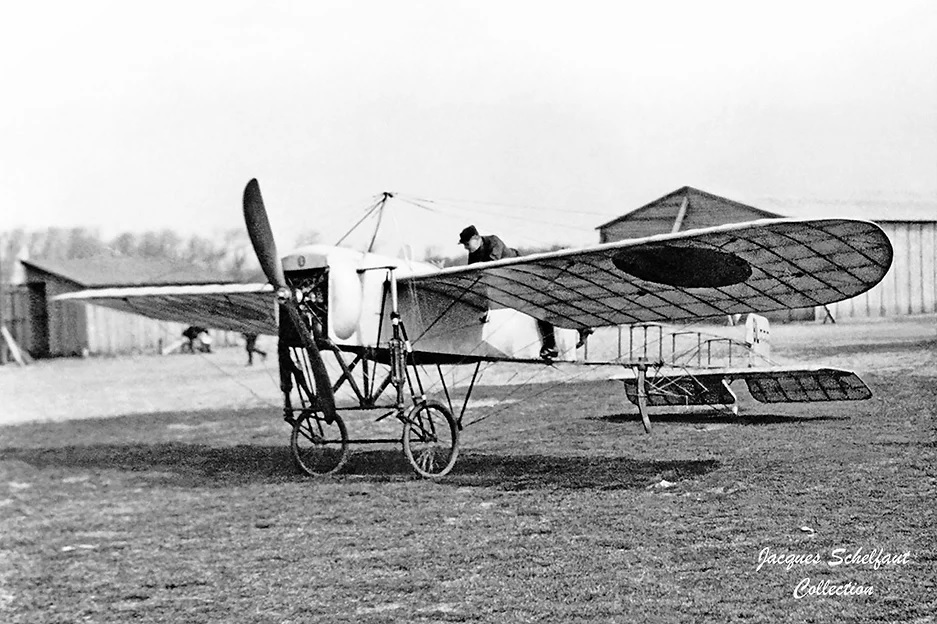
10 x JERO-Farman type Militaire 1914 or F.23 bis two-seater biplanes (that's the photo above); one is reported to have been destroyed in a crash in July, so maybe only 9 by 4 AUG.

6 x JERO-Farman type Militaire 1913 (also called F.XVI (F.16 or HF 16), similar to the F.23. Eight were delivered in 1913; at least two of which were out of action by 4 AUG.

These aircraft were organized into two (initially) rising to four squadrons ("escadrilles") of something like 6 aircraft each (the personnel strength is reported as five pilots, six observers, and an officer commanding (who'd likely have been the sixth pilot).

The small AMB added a fifth Escadrilles de monoplanes composed of three Bleriot XI machines...

...flown by civilian volunteers.

So a total of about 20-odd aircraft in five escadrilles. They had some unknown number of ground support crew - let's figure maybe 20 or so, three guys per airplane, and each squadron had a truck, plus one for the AMB so five trucks.

Pretty skimpy for an airforce.

Which reminds us; it's good to keep in mind how close these guys - all these 1914 fliers; Belgian, French, British, and German - were to the Wright Flyer...

...of 1903 compared to the airplanes, pilots, observers, and air forces of only four years later like the Fokker D.VIII below.

Like all the August aircraft the Belgian machines were unarmed (although it didn't take long for the fliers to start lugging pistols or rifles along; someone in a Belgian aircrew - presumably the observer - shot a German pilot with a rifle in late September that the dying German then force-landed or crashed...the world's first air combat loss) and intended purely for scouting. 

They were fragile and slow; here's the JERO-Farman F.23 bis specifications:

General -
Crew: 2 (pilot and observer)
Length overall: 8.06 m (26 ft 5 in)
Wingspan: 13.65 m (44 ft 9 in)
Powerplant: 1 × Gnome Lambda 7-cylinder air-cooled rotary piston engine, 60 kW (80 hp)

Performance -
Maximum speed: 165 km/h (103 mph, 89 kn)
Range: 315 km (196 mi, 170 nmi)
Endurance: 3 hours
Service ceiling: 1,050 m (3,440 ft)

Armament -
1914: none
by 1915: Guns: 1 × machine gun on flexible mount for observer
Bombs: small load of 75 mm (3.0 in) bombs.

Heavier-than-air (Belgium): Organization and Operations 

We're going to do this here, but the "air operations" part applies to all the combatants of 1914, so take that as a heads-up.

The Belgian air-ground coordination and organization above escadrille levels is kind of opaque. The Wiki entry for the Belgian Army order of battle says this about aviation:

"In 1913, the Belgian government created the Company of Aviators (Compagnie des Aviateurs), the antecedent of the Belgian Air Force, just two years after the inauguration of the country's first airfield at Brasschaat in 1911. Attached to the fortresses, the company was equipped with a total of 16 Maurice Farman biplanes. The Belgian army also had had four observation balloons which, like the aircraft, were also attached to the fortresses, and two small airships."

Presumably by 1914 the fliers were no longer "attached to fortresses", although the first AMB air operation is reported to have been over Liege, so perhaps some connection still existed. 

What the Belgian Army order of battle does suggest is that the aviators were "Army assets"; there doesn't appear to be anything like the connection between air and maneuver forces that we'll see when we look at France and Germany. 

So my assumption is that the Belgian fliers' were technically assigned to the GQG - the top headshed - but directed to coordinate with whichever ground element was in or around their operational area. The alternative would be to report their observations directly to the Army HQ, which would then push the intel down to the troop unit command(s) in the air ops area.

That's...not ideal.

As we'll see, the big problems with 1914 air recon were 1) transmission, 2) timeliness, and 3) detail. 

Without radio commo - and the air-to-ground radio "problem" was never really solved in WW1; the sets were too bulky and too finicky for reliable aircraft use - the only ways that air observers could communicate with the ground in real time were 1) dropping little notes or 2) actually landing.

The former were naturally limited in transmission and detail. Writing up a detailed reconnaissance report in an open cockpit is damn near impossible. So, at best, assuming the crew could find (or knew) where the local maneuver unit command element was located, the "report" would consist of a container with a sheet of paper inside dropped over the command staff reading "enemy (infantry/cavalry/artillery) dug in (advancing/retreating) at (distance) to the (direction)".

A British "message streamer" of later in the war

Not entirely worthless, but pretty sketchy for the division CG to write his op orders.

Landing was even sketchier. Remember how fragile these aircraft were, and the lack of infastructure of 1914 Europe. No nice broad paved roads or parking lots to land on and takeoff from. 

Even the farm fields - as level as any piece of 1914 ground around - were not the vast expanses of modern mechanized farming. And obstacles like wire fences, hedges, or ditches, might very well be invisible from the air but lethal touching down.

But the alternative was losing timeliness; having to return to the aircraft's home airstrip and then send - probably by courier, since the airstrip "base" surely lacked a radio, too - a report either to the maneuver headquarters directly or, worse, to Army HQ. Assuming the recon report actually reached the right field headquarters it would be hours (at best) old.

Bottom line; there wasn't a great answer to the "air recon" problem; that there were any, and that the fliers did have impacts on the ground maneuvers - and they did -is pretty outstanding.

Belgian air operations: Summary

I'm sure the AMB did what it could, but it was up against a German invasion so over powering that it forced the entire Belgian Army, including its aviators, out of all but a tiny corner of Belgian skies. 

So I'm not sure what, if anything, the AMB air reconnaissance missions accomplished; like the Belgian airships, there were just too many Germans and the Germans were better armed and organized. 

Knowing where the moving van is doesn't make standing in front of it any more profitable.

Next up:

Britain:


The Royal Flying Corps - RFC - was operational in France on or about13 AUG. The force that deployed consisted of four squadrons:

#2 Squadron; about 12 x B.E.2a two-seat biplanes (that's the photo above), 19 officers, 2 warrant officers, 21 sergeants and 111 rank and file, 7 light aircraft tenders, 6 heavy aircraft tenders, 4 repair lorries, 3 shed lorries, 4 reserve equipment lorries, 6 trailers and 6 motor cycles, 30cwt lorries for transporting equipment and supplies, which included 131 pistols, 23 whistles, 65 bars of yellow soap and 192 signal rockets (hat tip to the invaluable "RFC" website for the list...)

#3 Squadron: a mix of about 12 x B.E.2a and Farman F.20 two-seater biplanes and Bleriot XI monoplanes. Personnel and equipment as #2 Squadron.

#4 Squadron: as #2 Squadron.

#5 Squadron: a mix of about 9 x B.E2a and Farman F.20 and 3 x Avro 504 (that's the color photo below) two-seater biplanes. Personnel and equipment as #2 Squadron.


Aircraft Park "...a complement of spare aircraft and mechanics to undertake major repairs. The Park was to have 5 non-flying officers and 6 flying officers, 2 light tenders, 8 heavy tenders, 2 repair lorries 4 motor cycles and 2 reserve equipment lorries." (RFC website).

Assorted bits and pieces included an R.E.1 experimental two-seater biplane, two F.E.8 two-seater biplanes, and a Bleriot "Parasol" monoplane.

So a total of about 80 to 88 aircraft - 40-48 x  B.E.2a, 22 x  Farman F.20, 11 x  Bleriot XI, 3 x Avro 504 and four or five odds and sods - about 80 officers, 4 warrant officers, 85 NCOs, 450 other ranks with the assorted vehicles and equipment needed to sustain flight operations.

Britain: Organization and Operations.

With the RFC, we know where the fliers fit in the BEF organizational chart. Here:


The British fliers were directly under the flagpole, assigned to the Expeditionary Force General Headquarters. They were, as the chart says, "Army troops"

What I don't know is exactly how they operated there. The RFC in France was commanded by a one-star (brigadier general), so technically separated by three levels of command from the general officer commanding, Field Marshal Sir John French. 

So in theory it's possible that the individual aircraft reports went through their squadron (operations? intelligence?) officers up to the one of the general staff boffins, "GSO 1 (Operations) or "(Intelligence)" and from there bsck out to the troop units.

But.

Several major Army-troops unit commanders reported directly to the CG, including the Army engineer and artillery bosses. So I can see how the BEF might have stovepiped air recon intel directly to the CG's map table.

We'll come back to this, as well as talk about the RFC operations, after we look at the other two, the "big" aerial forces of August 1914.

France


So the Wikipedia post says that the Aéronautique Militaire contained 132 aircraft in 21 escadrilles. That works out to about 6.28 aircraft per squadron, which seems kinda hard on the guys who have to try and fly the 0.28 of an airplane.

I think those airplane and squadron numbers are wrong.

Another Wiki piece, on the 1914 French order of battle, breaks down the flying units and comes up with 23 squadrons.

And I think if we look back at the Belgians - who probably took not just their airplanes but their squadron MTO&E from their French neighbors - you get that a 1914 French escadrille was probably set up as 12 pilots and observers (for the two-seat aircraft) and six aircraft (or six pilots for the single-seaters). 

So 23 x 6 = 132, which I think is where the aircraft number comes from. 

But the breakdown numbers are different, and, I think, more probable.

Figure ground support staff about half the strength of the 12-airplane RFC squadron gives you about 50-60 troops and the usual trucks, whistles, bar soap (and wine, no doubt...) per escadrille.

Now...the problem we have is that France and Germany have big aircraft industries (by 1914 standards, anyway). And the "early industrial period" nature of airplane manufacturing at the time meant that it wasn't either "Boeing or Airbus". A gajillion little mom-and-pop-and-Maurice-Farman outfits were building airplanes that could and would be used for war, so here we go:

French aircraft:

The Farman F.20 was a big seller in 1914. The following units are listed as flying that aircraft type: Escadrilles HF 1, HF 7, HF 13, and HF 19. So let's call it 24 x Farman F.20s in four squadrons. 


An earlier Farman two-seater biplane type, the MF.11 "Shorthorn", was operated by Escadrilles MF 2, MF 5, MF 8, MF 16, and MF 20; 30 x Farman MF.11's in five squadrons. That's the MF.11 above.

The Caudron G.3 single-seat biplane is listed as operated by Escadrille C 11, so 6 x G.3 biplanes in a single squadron.

The Dorand DO.1 was the Sturmovik of it's day; the Wiki entry says that the crew was "... protected from small arms fire by 90 kg (200 lb) armour plates."

As you can imagine, given the tiny engine the DO.1 mounted, like all these early airplanes, adding 200 pounds of metal made a slow machine. The escadrilles reportedly equipped with them (DO 4, DO 6, and DO 22) are reported to have turned them in as soon as possible, but for August 1914, 18 x Dorand DO.1s.

(Worth noting that the Wiki entry for this aircraft lists three different squadrons for the Dorand; DO 14, DO 22, and says that the Voison squadron V 14 also operated several DO.1s. I'm not sure how to resolve this; the Wiki piece appears well researched and I have no way to field-check the squadron lists at the "order of battle" site. We'll just have to leave this out there...)
The two-seater REP Type N monoplane was operated by Escadrilles REP 15 and REP 27; so 12 x REP N's in two squadrons.

Voison type-L two-seater biplanes (that's the contraption tipping backwards in the photo at the head of this section) was operated by three squadrons; Escadrilles V 14, V 21, and V 24; so 18 x Voisons

Four squadrons operated Bleriot XI single-seat monoplanes; Escadrilles BL 3, BL9, BL 10, and BL 14; 24 x Bleriot types total.

Morane-Saulnier made two types of single-seater monoplane models in 1914, and either the Morane-Saulnier G and H types are reported to have been operated by Escadrille MS 17.

One final single-squadron aircraft, the Nieuport VI, a single-seat monoplane, was operated by Escadrille N 12.

So we're looking at 30 x MF.11, 24 x Farman F.20 and Bleriot XI, 18 x Voison L-type, Dorand DO-1s, 12 x REP N-types, and 6 x Nieuport VI and Caudron G.3 (for a total of 138, so either not all the squadrons were full strength or the overall number aircraft reported is wrong), about 200-250 officers and something like 1,200-2,000 troops with the assorted trucks, whistles, bar soap, etc.

France: Organization and Operations

We're going to see a big difference between the "minnows" - Belgium and Britain (and Britain is maybe more like herring or something, but still...) - and the "whales", France and Germany.

Because when we talked about the whole "air-to-ground-coordination/communication" thing?

The big land powers had clearly been thinking about that.

The "timeliness" problem - getting intelligence from the air to the ground and once there over the ground to where it was useful - had a simple and practical solution that the two smaller air powers either overlooked or considered unworkable; divvy up the air assets to the maneuver units rather than centralize them under the Army HQ flagpole.

We'll see how the Germans did this in a bit, but the French Army handed air reconnaissance out to the field armies. 

Here's what that looked like in print, from northwest to southeast:

France – Air Tasking 1 AUG 1914
5th Armee:
Six squadrons - DO 4, DO 6, C.11, N 12, REP 15, and V 24
4th Armee:
Two squadrons - V 14 and V 21
3rd Armee:
Five squadrons - MF 2, HF 7, HF 13, MF 16, and DO 22
2nd Armee:
Five squadrons - HF 1, MF 8, HF 19, MF 20, and MS 17
1st Armee:
Five squadrons - BL 3, BL 9, BL 10, BL 18, and MF 5

And on the map:

Makes pretty good sense. 5th Army with the open flank gets six squadrons; 4th, in reserve, gets only two, everyone else gets five. 

In Foch's place I might have robbed a couple more - say one squadron each - from 1st and 2nd Armies to strengthen 4th and 5th's recon program.

But the idea is there.

We'll get into the weeds on French air operations to the extent we can when we start to look at the ground campaign, but first let's look at the other side of the "forward edge of the battle area", at...

Germany

The German air service (what would come to be called the Deutsche Luftstreitkräfte in 1916 but on 1 AUG 1914 was still Die Fliegertruppen des deutschen Kaiserreiches - "the flying-troops of the German Empire" but let's call it "DFK" because the original German is a mouthful) was set up the same year at France's Aéronautique Militaire; 1910.

The German version of "military aviation" was spun up quickly - to match or counter the obvious French development of air power - and with a very German orderliness (the DFK was the only organization of the three major powers to have an intermediate levels of organization between the overall air command authority and the individual squadrons - called Abteilung in German - in the form of administrative "battalions" with internal "companies" of three to four squadrons each)

It also grew in size more rapidly than it's opponent; most of the standard references I can find state than on 1 AUG the two main opponents lined up across the Franco-German border like this:
France: about 130-140 aircraft in 23 squadrons of about 6 aircraft each,
Germany: a total of about 230 aircraft (of which about 50 were obsolete, so about 180 operational ) in 31 squadrons of 6 aircraft.

Don't forget that Germany also had to provide air reconnaissance for the eastern Army elements, so another five squadrons and 25 or 30 aircraft were posted there in August.

So here's a problem with all this.

Unlike the French, the Germana DFK didn't add a helpful tag to their squadron numbers, and I can't find a source (for a reasonable-to-a-hobby-historian-price, anyway) that breaks down who was flying which aircraft.

And Germany, like France, had a busy cottage-aircraft-industry. So there's a fair number of possibilities, and I'll just try and give you and idea of the general range of German aircraft that would have been employed for reconnaissance over the Frontiers.

German aircraft:

Perhaps the most iconic early-war machine was the Taube.

A 1909 design (originally by the Austro-Hungarian Etrich company, but by 1914 produced by numerous German firms including Albatros, DFW, Aviatik, Gotha, and Rumpler) this two-seater monoplane was verging on obsolescence at the start of the war but was insanely numerous; this website claims that roughly half of all German military aircraft - so something like 120-125 - were Taubes.

The Taube was, as the graceful wings suggest, very gentle and stable in the air. If you look closely at them, though, the wings (which aren't, despite the appearance, supposed to be "bird" wings but were modeled after some sort of winged seed-pod like a maplecopter) suggest one big problem:

No control devices, no ailerons. Taubes turned, climbed, and dove using the original Wright Brothers-style "wing warping".

That made them stable but slow to turn and easy prey for faster, more nimble enemies, and they were relegated to training in less than a year.

The remaining half-or-so of the DFK aircraft included several "B.I/B.II"-type two-seater biplanes; they all look similar, and my suspicion is that there was a standard DFK spec for this type that, like the Taube, was built by numerous manufacturers. For example, here's a AEG B.II,

an LVG B.I


an Aviatik B.I


and an Albatros B.I:

Look a lot alike, eh?

Makes sense when you think "military equipment"; keep it simple. 

If a "two-seater biplane" is always the same two-seater biplane then your mechanic's toolkit works on the replacment machine you just received even though it was built in Johannisthal by Luftverkehrsgesellschaft m.b.H. while the airplane it replaced was built by Albatros Flugzeugwerke GmbH next door.

So something like 180-185 operational aircraft in 31 Feldflieger Abteilung (FFA) of 6 aircraft each. Presuming a nominal officer establishment of 12 to 14 suggests another 50-60 NCOs and enlisted ground staff with the usual couple of trucks, tents, cookpots, etc., so something like 2,000-2,500 all ranks.

This is just the Western Front field force; it leaves out the whole rest of the DFK, which included the training schools (Fliegerersatzabteilungen), "fortress flying detachments" (Festungfliegerabteilungen), the reserve air-park units (Armee-flug-park). The FFA are just the tip of the DFK propellor.

Germany: Organization and Operations

We've seen the Entente air coordination get further into the weeds as the air organizations got more bigger and more sophisticated; nothing below Army GHQ for Belgium and Britain, down to field Army HQ for France.

The DFK broke their coordination down one level further; to the corps - "Armeekorps" in German - level. Here's the breakout. "AK" is an active armeekorps, "RK" is a reserve corps, so "2AK" is II Armeekorps, "4 RK" is IV Reserve-Korps. Bavarian units are identified by a "B" or "(Bavarian)":

Germany – Air Tasking:
Total of 31 Feldflieger Abteilungen (including 3 Bavarian)

1st Feldarmee (total of 5 attached FFA)
Army: FFA 12
2AK: FFA 30
3AK: FFA 7
4AK: FFA 9
9AK: FFA 11
3RK: None
4RK: None

2nd Feldarmee (total of 4 FFA)
Army: FFA 23
Guard AK: FFA 1
Guard RK: None
7AK: FFA 18
10AK: FFA 21
7RK: None
10RK: None

3rd Feldarmee (total of 4 FFA)
Army: FFA 7
11AK: FFA 28
12AK: FFA 29
19AK: FFA 24
12RK: None

4th Feldarmee (total of 4FFA)
Army: FFA 6
6AK: FFA 13
8AK: FFA 10
18AK: FFA 27
7RK: None
18RK: None 

5th Feldarmee (total of 4 FFA)
Army: FFA 25
5AK: FFA 19
13AK: FFA 4
16AK: FFA 2
5RK: None
6RK: None 

6th Feldarmee (total of 4 FFA)
Army: FFA 6
21AK: None
1BAK: FFA 1 (Bavarian)
2BAK: FFA 2 (Bavarian)
3 BAK: FFA 3 (Bavarian)
1BRK: None

7th Feldarmee (total of 3 FFA)
Army: FFA 26
14AK: FFA 20
15AK: FFA 3
14RK: None

FYI, here's the Eastern Front units for comparison:

8th Feldarmee (total of 4/5 FFA)
Army: FFA 16
1AK: FFA 14
17AK: FFA 17
20AK: FFA 15
1RAK: None
East (unassigned?) – FFA 4

Everything I've read suggests that the DFK was well organized and cooperated effectively with the Imperial maneuver commanders in ways that the zeppelins either didn't or couldn't. 

Certainly the breakdown of air detachments to individual army corps - which often had tactical intelligence needs not shared by their field army as a whole, or the other corps in that army - suggests a higher level of German understanding of air reconnaissance intelligence collection, processing, and dissemination that any of their French or British opponents.

But there appears to be some real holes there, as we'll see.


At this point I think we've discussed all the precursors; the setting, the plans, the reconnaissance troops that had to execute those plans. All that remains is to set the plans in motion and, looking at the reconnaissance elements, try and see what happened along the frontier in the month of August.

That's for the next installment:

Next: Shots Fired!