Showing posts with label technology. Show all posts

Friday, February 23, 2024

Whitey on the moon

Turns out that an assload of private contractors (because natch...) put a lander on the Moon.

Apparently NASA was involved, but the primary was something called "Intuitive Machines" that designed and built the actual lander. The Reuters story says that "The NASA payload focuses on space weather interactions with the moon's surface, radio astronomy and other aspects of the lunar environment for future landing missions."

Which just reminds me of 1) how excited 12-year-old me was at the Apollo lunar landings, and 2) how silly that excitement looks with fifty years of perspective.

As adventure? Sure. It was pretty adventurous. The science (at least to my eyes, anyway) cooks down to some helpful planetary geology. Some useful tech emerged from the space program. The unmanned probes like Galileo have produced some immensely valuable knowledge of our solar system, and the various iterations of orbital telescopes some fascinating cosmology.

But Einstein's Wall still stands.

Human extra-atmospheric travel is still hugely impractical, and the notion of space-faring is and will be the realm of fiction.

All this farkling about on the Moon is a simple reminder that the thing is a cold dead rock.

The article goes on to say that this: 

"...marked the first "soft landing" on the moon ever by a commercially manufactured and operated vehicle and the first under NASA's Artemis lunar program, as the U.S. races to return astronauts to Earth's natural satellite before China lands its own crewed spacecraft there. NASA aims to land its first crewed Artemis in late 2026 as part of long-term, sustained lunar exploration and a stepping stone toward eventual human flights to Mars."

Which is just nuts.

There's no value in sending people back to the Moon, and even less to Mars. Like keeping a mistress, the pleasure is transient, the position ridiculous, and the expense damnable. There's nothing on either celestial body that a drone or robotic probe can't examine.

FFS let the PRC waste time and money sending people to the Moon.

Right here we can't figure out how to get hoboes out of the fucking public streets. I don't see we're going to learn anything more to spend a ton of money to send someone back to the Sea of Tranquility to kick rocks.

Now if there was some Wensleydale, mind...

Saturday, July 10, 2021

Techbros

My iPhone does this thing where if I respond immediately to an email it refuses to copy the earlier emails in the thread into the reply. 
 
I have to open the email, close, reopen, then wait a bit and then it’ll copy. 
 
My boss gets fussy every time it fails to do this, like today.

My Boss: Why don’t you copy all the earlier emails when you reply? It makes it hard to follow the conversation.
Me: (explains about the iPhone thing)...so when I’m doing four things at once, like today (hint) and don’t have time to be patient and wait, you don’t get the other stuff.’
MB: Well, it’s very distracting.
Me: Why? How hard is it to remember what you read two minutes earlier?
MB: Why doesn’t it just do it automatically?
Me: Because I am it’s bitch and every so often it has to prove it to me.
MB:
Me:
MB: Just do the thing that makes it copy, okay?
Me: What fun is that? Okay, fine. You useta be a lot more fun when you were just project level.
 

Friday, July 07, 2017

The NORK Nukes - 2017 International Tour!

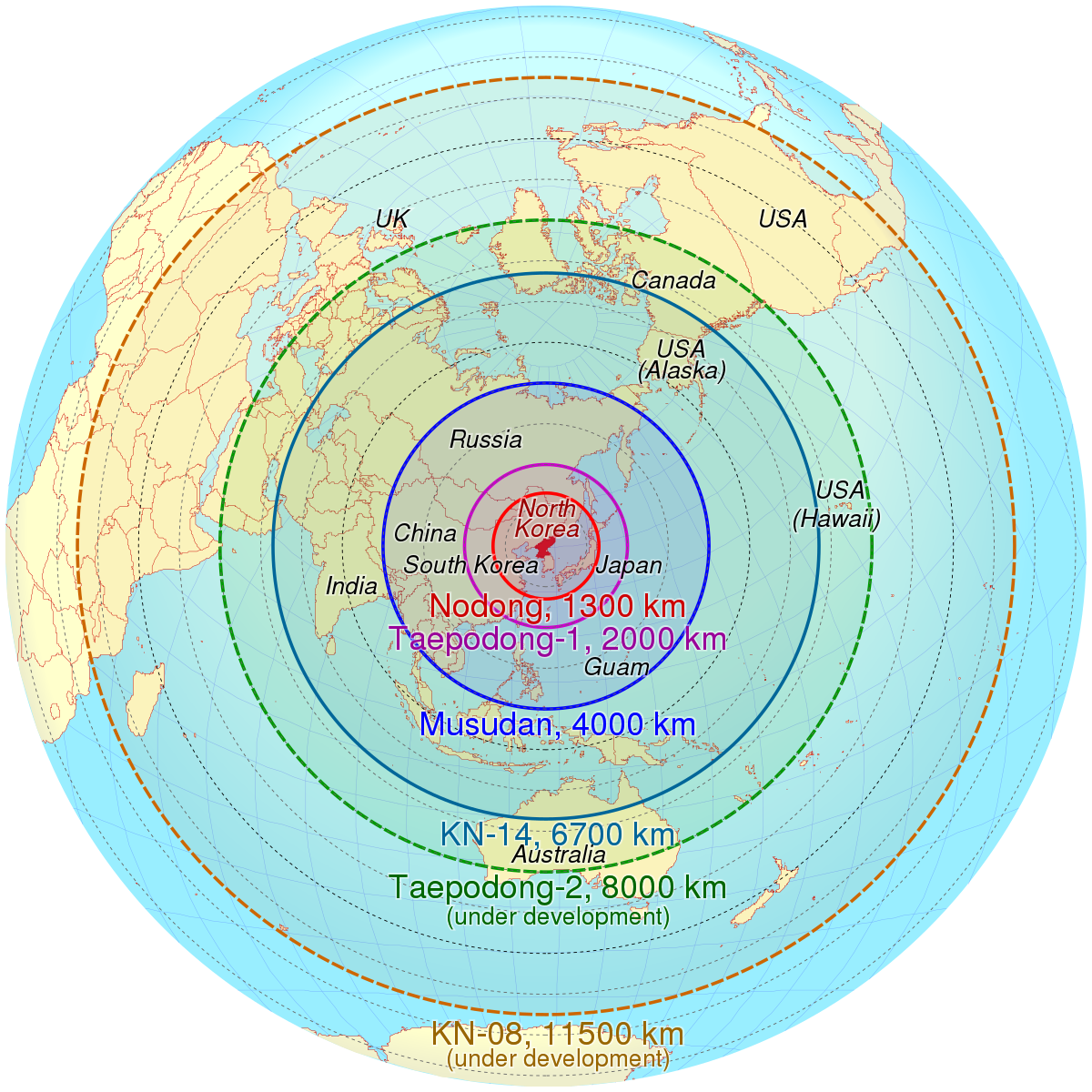
In what may well be the most NORK-y Fourth of July fireworks display ever, the Pyongyang regime appears to have successfully tested a nuclear-capable missile with the range to reach the western portions of North America; by definition an intercontinental ballistic missile.


The linked article does a good job discussing the strategic implications of this success, but the tl:dr version is "there are no good military options".

Simply put, the DPRK appears to have obtained what Stalin's Soviet Union did in the 1940s; a successful defense against U.S. military strongarming. Never a particularly good idea, given the NORK capabilities for inflicting nasty mayhem to American-aligned nations in northeast Asia, if the NORKs have the capability to directly threaten the U.S. mainland this option goes from "barely conceivable" to "off the table".

What's more, the strategic calculus of potentially-holding-U.S.-population-centers-hostage changes the relationship between the U.S. and Asian allies such as Japan and South Korea. If Trump wanted the Japanese government to start building its own nukes Pyongyang may well have given it the same push that the Soviets gave the British and French governments during the Cold War - the worry that the Land of the Big PX would be hesitant to risk its own civilians in the face of a possible nuclear exchange.

Where does the Tangerine Toddler fit into all this? Swinging the Big Stupid bat, of course. The King of the Deal is discovering what diplomats and potentates throughout history have discovered, albeit at his own, short-bus-slow-reader speed; that polities with interests that conflict with your own can't always - and often won't ever - be coaxed, swayed, or bullied into acting against their own interests. China fears a NORK collapse more than anything the U.S. can threaten. Figuring out a way to adjust U.S. geopolitical approaches to the new northeast Asian realities will require a hell of a lot more patience, creativity, and intelligence than either the current Chief Executive - who seems more interested in ginning up a "Blut und Ehre" white nationalist agenda - or his people have shown to date.

Nukes are funny things. Technically they are "weapons of war"...but they work well only as potential, not kinetic, energy. When the first nuke is thrown at a nuclear-armed adversary they have effectively lost much of their usefulness. If war is the "continuation of politics by other means" the problem with nuclear war is that, unlike politics, there is no real way to plan or predict or strategize what happens after the fallout settles. A single warhead getting through to a single city will mean that even the "winner" will suffer. There is little consolation for the "winning" public knowing that the northern portion of the Korean peninsula is a glassy wasteland.

Maintaining the nuclear balance was a difficult task for U.S. leaders like Truman and Eisenhower. What happens when the launch codes are clutched in the stubby fingers of a man whose primary education in conflict was as a WWF wrestling heel is something that I'm not sure I want to find out.

Thursday, May 14, 2015

And speaking of mortars...

...my baggage followed me to Antietam battlefield last week.


The Monday after my father died I drove from the rural town in southeastern Pennsylvania where my parents have lived for the past decade south and west to the hilly border of south-central Maryland, to the old Civil War battlefield of Sharpsburg (as the rebels called it) along the Antietam Creek.

I needed a day away from the room where I'd spent the past three days watching my old man die, and although I wrote about the fight back in 2008 I'd never been to the actual field. Given the park-like setting of these old battlegrounds it seemed like a good place to find peace.

And the park is, as all these parks memorializing the battles long ago in this most brutal of America's industrial wars seem to be, very pretty and pastoral. The stone soldiers and green-barreled cannon always seem to be a little sheepish, as if silently apologizing for reminding you of the vicious slaughter that they commemorate.

So I spent a pleasant idle day driving and wandering around the old battlefield, marveling at the suicidal bravery of those men on both sides who walked upright into a storm of rifle-musket and cannon fire. I stood by the narrow stone bridge now named after one of the U.S. Army's least competent general officers and tried to figure out how I as a sergeant of 1862 would have convinced my platoon to advance over that beaten zone and couldn't imagine it. Christ, what an awful nightmare.

But the place where my backstory caught up with me was near what had been the center of the fight, what has become known as Bloody Lane.
Here's what the Park Service says about this place:
"The Sunken Road, as it was known to area residents prior to the Battle of Antietam, was a dirt farm lane which was used primarily by farmers to bypass Sharpsburg and been worn down over the years by rain and wagon traffic. On September 17, 1862, Confederate Maj. Gen. Daniel Harvey Hill placed his division of approximately 2,600 men along the road, piled fence rails on the embankment to further strengthen the position and waited for the advance of the Union army. As Federal troops moved to reinforce the fighting in the West Woods, Union Maj. Gen. William H. French and his 5,500 men veered south, towards Hill's position along the Sunken Road. As French's men approached the Sunken Road, the Confederate troops staggered them with a powerful volley delivered at a range of less than one hundred yards.

Union and Confederate troops dug in. For nearly four hours, from 9:30 a.m. to 1 p.m., bitter fighting raged along this road as French, supported by Gen. Israel B. Richardson`s division, sought to drive the Southerners back. Outnumbered but with a well-defended position, the Confederates in the road stood their ground for most of the morning. Finally, the Federals were able to overwhelm Hill's men, successfully driving them from this strong position and piercing the center of the Confederacy's line. However, the Federals did not follow up this success with additional attacks, and confusion and sheer exhaustion ended the fighting in this part of the battlefield. In three hours of combat, 5,500 soldiers were killed or wounded and neither side gained a decisive advantage. The Sunken Road was now Bloody Lane."
The stroll through the fields down to Bloody Lane was quick and pleasant, the sun warm on my shoulders and the shade of hedgerows noisy with the chipping of the sparrows. But the Lane itself came as something of a surprise.

I had imagined the feature as a sort of natural field fortification; deep, narrow, and with a long slope down to the east in front of it. This would have satisfied the conventional image of the Lane as a fearsome barrier and perfect killzone. The actual topography of the Lane and the ground imediately to the east is very different.

For one thing, the Lane runs along a natural swale with high ground to both east and west. A D.H. Hill private with an Enfield rifle-musket standing in the bottom waiting for French's guys to come at him would have seen this:


The field of fire from the Lane to the crest of the high ground to the northeast is maybe 30 meters, and nowhere more than 50. Hill's troopers' fire commanded a distance that a guy with a strong arm could have hucked a rock.

Now that surprised me.

I had imagined that the Union attack had to push across hundreds of yards of beaten zone, a sort of American St. Privat, and that bloody slog was what had given Bloody Lane its name. But, no. The Yanks had a perfectly good piece of dead ground close enough to have had the whole dang brigade dug into shallow foxholes covering the Reb positions whilst the battalion mortars dropped baseplates in defilade 200 meters to the rear and just fucking pasted the living shit out of every sonofabitch in that sunken road.

But...that was the problem. French and Richardson's people didn't have mortars.

Or, at least, not the sort of mortars I expect to have providing me with indirect fire support and blowing hell out of enemy revetments like this. Somewhere they had what were called "coehorn" mortars, but those things were probably stuck somewhere in the field trains miles away. Their supporting field artillery might have had a couple of howitzers stuck in somewhere, but their arc of fire was probably little more than a shallow rainbow that would have - assuming that the grunts could have worked out some way of running back to the battery to adjust the fall of shot - like as not either missed long or buried their shells in the front slope of the Lane.
So.

The Bloody Lane Problem is just another occasion of the problem that American Civil War infantry had throughout the war; they just flat out didn't have any means or methods of quickly throwing effective quantities of high explosive into a hastily dug-in enemy. That problem was solved by the "trench mortar" forty years later...and the defenders responded by digging narrower and deeper trenches and roofing them over. No military technology is decisive for very long; human ingenuity is simply too ingenious. But in 1862 the rifled musket was the King of Battle, and the only way to winkle some bastards with Springfields or Enfields out from behind a wall or a fence, or out of a sunken lane, was with human muscle behind another Springfield, or Enfield backed up with direct-firing cannon artillery.

So the poor sods died in their thousands and tens of thousands assaulting Bloody Lane and the Mule Shoe and the stone bridge just a couple of miles away.

We Americans love our military technology. If anything, we tend to think that there's a technical solution to damn near any military problem. Bloody Lane, though, is a good reminder that sometimes the problem is that the technological solution won't work, or can't be applied, or just isn't there, and that the price of "politics by other means" will then be paid in full, and in blood.

Wednesday, December 26, 2012

Rise of the Machines

Interesting Krugman column here.

Since it is behind the paywall let me summarize: Krugman starts out with Bob Gordon's summary of the "industrial revolutions" of the last 300 years. In Gordon's (and Krugman's) view these were and are:

1 - (steam, railroads) from 1750 to 1830;
2 - (electricity, internal combustion engine, running water, indoor toilets, communications, entertainment, chemicals, petroleum) from 1870 to 1900; and
3 - (computers, the web, mobile phones) from 1960 to present.

Krugman then goes on to discuss his disagreement with Gordon that IR#3 - the digital revolution - has substantially run its course and will (or is already) yielding lesser and lesser economic gains. Krugman's primary issue with this is his conviction that the IT revolution has really not fulfilled its potential. He observes that
"...it turns out that there are other ways of producing very smart machines (and then details some of those ways) And this means that in a sense we are moving toward something like my intelligent-robots world; many, many tasks are becoming machine-friendly. This in turn means that Gordon is probably wrong about diminishing returns to technology."
I do not pretend to be especially tech-savvy so I am not sure of the actual practicalities of this. But I will defer to Krugman on the issue and assume that there is, in fact, a continued economic benefit to come. BUT...then he comes to what I consider the crux of the biscuit:
"Ah, you ask, but what about the people? Very good question. Smart machines may make higher GDP possible, but also reduce the demand for people — including smart people. So we could be looking at a society that grows ever richer, but in which all the gains in wealth accrue to whoever owns the robots.
And then eventually Skynet decides to kill us all, but that’s another story."
But I would go further than this.

General prosperity in such a society would actually depend on there being fewer people.

In such a society the remaining human work would fall on the top and bottom ends of the labor spectrum; the truly "creative" sorts of work - art, architecture, medicine, engineering - which require an inductive leap not programmable in a machine, and the physically-demanding-but-inductive sorts of work, like sorting trash from recyclables, performing bed-baths (and other medical dog-work), and waiting tables.

The latter sort would, as they always have been, be low-paid and low-esteemed. But that's the subject of another post.

But the point is that this world of Krugman's presumes that a huge volume of the work now done by humans - the "middle" sort, the kind requiring human muscles but not especially skilled human brains - will be done by machines.

But in that case...what the hell do you DO with those leftover humans, the ones too handless to be artists but too ambitious to be street-cleaners?

My point is and has been for some time that we in the First World are moving into an economy where we have too many people for too few jobs; that the sorts of massively labor-intensive industrial work of the 20th Century (riveting steamships, assembling buildings, constructing highways) have effectively vanished, replaced by the same work done largely by machinery.

But the human faculty for reproduction has not been similarly upgraded; we're still littering the Earth with our spawn. And, given that so many of said spawn will not or can not be trained to do those top-end creative jobs (high school graduation still lingers around the 70% range, tops, and college graduation is far lower), that many of these progeny look towards a fairly bleak employment future, even assuming that the most optimistic of Krugman's predictions comes true.
The bleak possibility that follows from this is the development of a sizeable group of unemployed and unemployable people who, at best, are pacified by televised entertainment and a dole but who, at worst, represent a constant threat to the society around them, a lumpenproletariat liable to be swayed by political rhetoric and shaped into a mob by unscrupulous politicians.

That, or exterminated by the machines.
But that is, indeed, another story.

Still, a rather dampening thought for a damp Boxing Day.

Monday, February 13, 2012

Luftschiffe

One thing that one of the regular commentors here noticed that I hadn't - at least consciously - was the regular appearance of the image of a rigid airship, a zeppelin, in the cartoon doodlings from the past week.He asked if I'd been reading steampunk fiction lately, and while I enjoy the genre the answer is no; I've always been a sort of zeppelin crank.They just seem sort of dangerously cool to me, and I love the idea of this massive thing floating along nearly silently, like a cloud only with several tons of bombs inside, over an enemy landscape as a sort of aerial assassin. Scary cool, if you will.Mind you, if I was on the ground the scary would have it all over the cool.

And even in the air - the rigid airships seem to have been fiendishly dangerous for their crew and passengers. Certainly the German zeps got hammered by constantly improving antiaircraft and fighter defenses. The statistics tell the story; 53 destroyed and 24 damaged to the point of being non-mission capable out of an total of 115 airships. Crew loss rate of 40%. Cost about five times the total damage inflicted.Still. Call the zeppelins a personal quirk, an indulgence, one of my hidden passions, an odd devotion to a vestigial past.Airships are still just freaking cool.

Anybody else out there have one of these odd, trivial passions?

Monday, June 21, 2010

Indistinguishable from magic

Spent an irritating half-hour or so today at work fiddling with a piece of software that was having some sort of personal problem.

Eventually I closed the application, reopened it and it worked fine again.

Imagine if we accepted that as a standard of design functionality for the other things we use on a daily basis. The car suddenly stops turning right; to repair it we have to stop the car, shut off the engine, get out, get back in, start the engine and drive away. We don't understand why it went wrong, why it stopped working wrong, and how we fixed it.

We'd junk the bastard in a heartbeat.

And yet, we - those of us not part of Macintosh World - accept this level of computer hardware and software malfunction as normal and expected.

Honestly, sometimes I think we're a tiny bit afraid of our digital masters, like the thunder-worshiping monkeys we were. We tinker cluelessly with powers we don't understand...

Tuesday, January 12, 2010

Hang up and Drive

January 1 was the first day of Oregon's new "cell-phone law". From that day forward, you touch your cell phone at your peril while driving.

Supposedly you can still talk if you have a "hands-free" device, but I suspect that my old LG pocketwatch won't adapt to them. Which means a new cell phone...

...or something.

The thing I find a little irking is that I am generally a fairly decent driver with my cell on. I don't dial the thing, and it picks up when I open it, so there's no buttons to push when someone calls in.

The things I do that do tend to distract me - eating, and reading maps - are still perfectly legal, or so I understand. And I drive a lot at work, and using the cell to talk while going from one site to another is a very efficient way for me to work.

But no matter; it looks like I'm going to have to go to the goddam Verison store.Rrrr.

Monday, July 20, 2009

Small Step to Nowhere..?

I'm not immune to popular enthusiasms, and with that I note the 40th anniversary for the "small step for a man" that capped NASA's manned space program in 1969.I was not a particularly bright kid at the age of 12, and I remember the summer of '69 more for my mother's frenzied ranting at the Chicago Cubs on their way to their traditional September swoon in the year of the Miracle Mets than for the lunar landing.

And, really, after forty years, you have to look back - at least, some of us look back - and wonder; what the fuck?

Riley over at Bats Left/Throws Right pretty much nails it. The space program was born, grew, and died like a mayfly, in 1969, It didn't die because somehow we jacked the money to bomb Vietnam or give food stamps to Negroes.
"It died because it's damned near at the edge of what we might accomplish provided we threw everything we've got into it (and if we haven't learned from doing that several times over that the main thing it accomplishes is bankruptcy, then we've been paying even less attention than we appear to be), and means fucking nothing whatsoever to anyone above the mental age of eleven..."

The reality is that Einstein's Wall makes interstellar travel impractical unless you're willing to construct monstrous argosies that will carry, in effect, little Earths, voyaging for countless generations through the empty voids between the stars. Even assuming the idea was practical - and the ill-fated "Biosphere" experiments suggest that we are, at best, generations away from a workable model, no nation could afford it. Mars and Venus, the closest planetary objects to us, cannot support life, and the remaining planets are even worse.

Nope. We're stuck on this planet save for in the imagination of sci-fi fans, books and movies. The "moon shots" were a one-off, a vastly expensive, mildly entertaining bit of government pork thrown at the military, useful for collecting some rather valuable geologic data but otherwise sterile. The fact that there are mental ten-year-olds presently in elective office that seem to think that sending a human being to Mars is a good idea says more about our electoral process than it does about the value of the idea.

So I guess I understand why the "celebration" of the anniversary of Apollo 11's landing was so muted.

Who celebrates the puberty of a eunuch?

Update 7/21 pm: I want to hammer this home - I'm not saying this stuff just to be curmudgeonly. The IDEAL of space exploration, of humanity finding a way to the stars, is a terrific one. Not only for the pure knowledge and adventure of it - being confined to a single planet is begging for extinction. But here's my deal; why are we celebrating our piddly little "dream" of flag-waving Yankee Doodle moon shots? Why not dream REALLY big? An "Ark in Space", the real chance to give the human race a shot at a future beyond the lifetime of our star?

National space progams like the Apollo missions, IMO, are the problem, not the solution. They divide the human race, forcing nation to compete against nation, militarizing the space programs and condemning us to farting around near the Earth's orbit for the next ten generations.

The real dream is up there. But the groundwork for the dream is here, on Earth, and it involves moving beyond the Apollo-type missions to real, global cooperation and exploration and, yes, commercialization, of space.The day we see the launch of the "Nostromo" from Kaiser's orbiting shipyard near Ceres, with a commercial crew and funding from Reynolds Metals, will be the true culmination of the dream of space exploration. At that point we will truly be reaching out into space, rather than simply using it as a void through which to swing a fist.